Call a chimney contractor during the planning stage, before any shingles come off. You’ll want the flashing, masonry, and crown evaluated while problems are still hidden and access is limited. Bring the contractor back mid-teardown to inspect exposed decking and substrate, then again during final sealing to verify a watertight seal. Staged involvement protects long-term waterproofing. Understanding which conditions demand specialist attention will help you coordinate both crews and avoid costly failures.
Key Takeaways
- Call a chimney contractor during the planning stage, before any shingles come off, to evaluate flashing, masonry, and the crown while problems remain hidden.
- Involve the contractor mid-teardown to inspect exposed decking, substrate, and flashing condition once roofers remove shingles within 18 to 24 inches.
- Schedule chimney work when masonry is compromised, completing tuckpointing, repointing, or crown repair before new counterflashing is embedded in mortar joints.
- Bring in a specialist for final installation to verify a watertight seal, test moisture, and confirm proper flashing layering.
- Coordinate the chimney contractor and roofing crew throughout so flashing, masonry, and underlayment integrate as one waterproofing system.
When should you call a chimney contractor during a roof replacement

You should call a chimney contractor during the planning stage of a roof replacement, before any shingles come off. Bringing in a chimney contractor during reroofing lets you evaluate existing flashing, masonry, and the crown while access is limited and problems are still hidden. Treat the base, step flashing, and counterflashing as one system, then have a chimney repair contractor new roof assessment confirm whether rust, gaps, or cracked mortar joints will compromise the seal. Roofers typically remove shingles within 18 to 24 inches of the chimney to inspect the substrate, so coordinate that teardown early. A combined chimney and roofing contractor approach ensures the flashing, decking, and underlayment get rebuilt correctly and stay watertight long-term. Planning metal roof transitions effectively helps ensure proper sealing, material compatibility, and long-term protection against leaks.
Which chimney conditions need specialist attention before roofing
Several chimney conditions need specialist attention before the roofing crew starts. Check the flashing first. If you see gaps, lifted seams, corrosion, or rust, you need a chimney contractor roof replacement plan before teardown. Water intrusion around the chimney signals failed waterproofing that won’t reseal after reroofing. Inspect the masonry too. Cracked mortar joints, crumbling brick, or a worn crown can compromise counterflashing embedded in those joints, so schedule tuckpointing or crown repair first. Don’t trust old sealant or roofing cement as permanent fixes. Aging metal rarely seals properly again, making reuse a serious mistake. When leaks, decking damage, or deteriorated masonry appear, coordinate chimney service roof replacement work so flashing, masonry, and roofing get rebuilt as one watertight system.
When does damaged masonry require chimney work rather than roofing work

Damaged masonry requires chimney work when the masonry itself is compromised, not just the flashing. When you see cracked mortar joints around the chimney, that’s a structural issue your roofer can’t address with flashing alone. Counterflashing gets embedded into mortar joints, so if the mortar’s crumbling or separating, you’ll need tuckpointing or repointing before new flashing goes in. Deteriorated masonry undermines flashing performance no matter how precisely it’s installed.
Crown wear indicates another masonry problem. When the chimney top shows cracking or erosion, moisture enters from above, and crown repair becomes necessary. Call a chimney contractor when brick, mortar, or the crown needs attention before flashing. Fixing the masonry first ensures the new flashing seals against sound material, not failing brickwork.
Which project stages may need chimney contractor involvement
Chimney contractor involvement is needed during three distinct project stages: planning, mid-teardown inspection, and final sealing. You should engage a contractor at each of these stages, since each exposes conditions that affect long-term waterproofing.
| Project Stage | Why It Needs a Contractor |
|---|---|
| Planning | Evaluate existing flashing, masonry, and crown before teardown |
| Mid-Teardown | Inspect exposed decking, substrate, and flashing condition |
| Final Installation | Verify watertight seal, test moisture, confirm proper layering |
During planning, you’ll identify rust, gaps, or failed sealant that shape the scope. After shingles come off, you’ll check decking and step flashing. Before closing the roof, you’ll confirm counterflashing, sealant, and fastening integrity, reducing the chance of future leaks and repeated patching.
How should roofing and chimney scopes be separated

Separate roofing and chimney scopes by defining where roofing work ends and chimney work begins. Assign the roofing crew responsibility for shingles, underlayment, deck repair, and step flashing that layers with each shingle course. Assign the chimney contractor responsibility for masonry, crown repair, tuckpointing, and counterflashing embedded in mortar joints. Treat the base flashing, step flashing, and counterflashing as one waterproofing system, but clarify who installs each layer to prevent gaps at handoff points. When masonry needs repointing or crown work, schedule it before final flashing goes in. Document these boundaries in writing so neither trade reuses failed flashing or leaves seams unsealed. Clear scope separation reduces leaks, rework, and finger-pointing later.
What information should you share with the chimney contractor
Share the full scope of your roof replacement with the chimney contractor so they can plan their work around your timeline and access window. Tell them whether you’re doing a full tear-off or partial repair, since that determines how much roofing they’ll need to remove around the chimney base. Share your pre-project inspection findings, including rust, peeling, gaps, cracked mortar, or prior patchwork, so they can anticipate flashing and masonry needs. Report any water intrusion, attic moisture, or leak history near the chimney collar. Note whether the chimney is masonry or sided, its height, and the surrounding roof geometry, since these affect access and step-flashing complexity. Finally, confirm whether you’ll need tuckpointing, crown repair, or new underlayment so they can coordinate directly with your roofing crew. Optimal chimney height calculations explained help ensure proper ventilation, prevent downdrafts, and maintain safe, code-compliant chimney performance.
When should chimney work be scheduled during the roofing project
Schedule chimney work during the roof replacement while access is open and the roof system can be rebuilt as one unit. Coordinate the chimney contractor and roofing crew so flashing, masonry, and underlayment layers integrate correctly rather than as disconnected patches. Once shingles come off, you can inspect decking, address masonry defects, and set new flashing before the roof closes up. Chimney maintenance before roof replacement helps prevent leaks, protect the new roof, and avoid costly repairs later.
- Remove shingles within 18 to 24 inches of the chimney before inspection and masonry work begins.
- Complete tuckpointing, crown repair, and mortar work before embedding counterflashing.
- Install step flashing course by course as shingles go down, never afterward.
- Verify a watertight seal at seams, collar, and edges before final closure.
Bring in the Chimney Contractor Before the Roof Closes Back Up
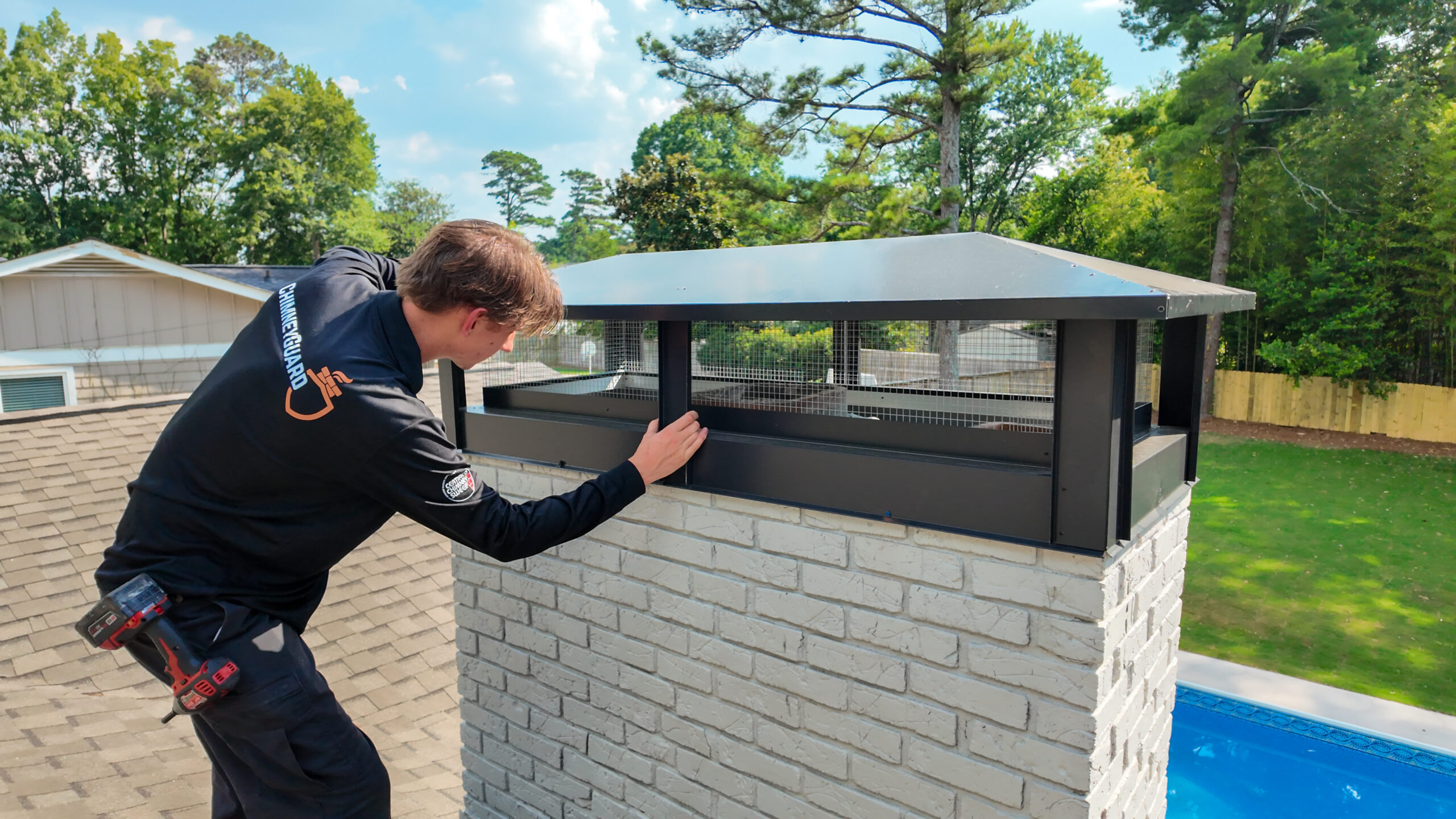
A roof replacement gives you a limited window to address problems where the chimney and roofing system meet. If the masonry, flashing, or surrounding area needs work, finding it before the new roof is finished can prevent the same area from having to be opened again. ChimneyGuard provides chimney inspections and chimney flashing repair and installation throughout the Greater Atlanta area. Call (877) 804-8273 before or during your roof replacement if the chimney needs to be inspected or repaired while access is available.
Frequently Asked Questions
How Much Does Chimney Flashing Replacement Typically Cost?
What you should know is that cost depends on flashing condition, whether adjacent decking or masonry needs repair, roof steepness, and chimney complexity. If you’re facing corrosion, cracked mortar, or water intrusion, you’ll likely need coordinated work. Contact a chimney contractor for an accurate, project-specific quote before you begin.
Can I Replace Chimney Flashing Myself Instead of Hiring Someone?
You can, but it’s risky unless you understand flashing systems. You’ll need to layer step flashing correctly with each shingle course, embed counterflashing into mortar joints, and fasten and seal everything properly. Don’t rely on old caulk or roofing cement as permanent fixes. If you spot rust, cracked mortar, or deck damage, call a contractor. Improper installation leads to leaks, attic moisture, and repeated patching, so weigh your skills carefully first.
How Long Does Chimney Flashing Usually Last Before Failing?
You won’t get a fixed lifespan, but you’ll see flashing failure signaled by gaps, lifted seams, corrosion, or rust. Watch for these warning signs, since aging metal rarely seals reliably after that point. If you notice water intrusion around the chimney, don’t rely on old sealant or roofing cement as a permanent fix. Have your flashing evaluated before teardown, because failed flashing can’t be reused during a roof replacement.
Does Homeowners Insurance Cover Chimney Flashing or Masonry Repairs?
Failed flashing, corrosion, cracked mortar, and water intrusion should be evaluated during your roof replacement. You’ll want a chimney contractor to assess whether flashing, decking, or masonry needs work. For coverage specifics, contact your insurer directly and document any damage before repairs begin.
What Licensing or Certifications Should a Chimney Contractor Have?
You’ll want a contractor who’s licensed for masonry and roofing work in your state, since chimney flashing bridges both trades. Look for CSIA certification, which confirms they’ve trained in chimney systems, waterproofing, and inspection standards. Verify they carry liability insurance and workers’ comp to protect you during teardown. Ask about manufacturer certifications for flashing and underlayment products too, because proper installation often determines your warranty coverage and long-term leak protection.