Chimney Flashing Repair & Installation Services
Chimney flashing is your roof’s primary defense against water intrusion. Positioned at the vulnerable intersection where your masonry stack meets the roofline, metal flashing creates an airtight, waterproof seal. Over time, rusting metal, failing sealant, roof settling, or severe weather cause flashing to loosen or warp, leading to severe, hidden water damage inside your home.
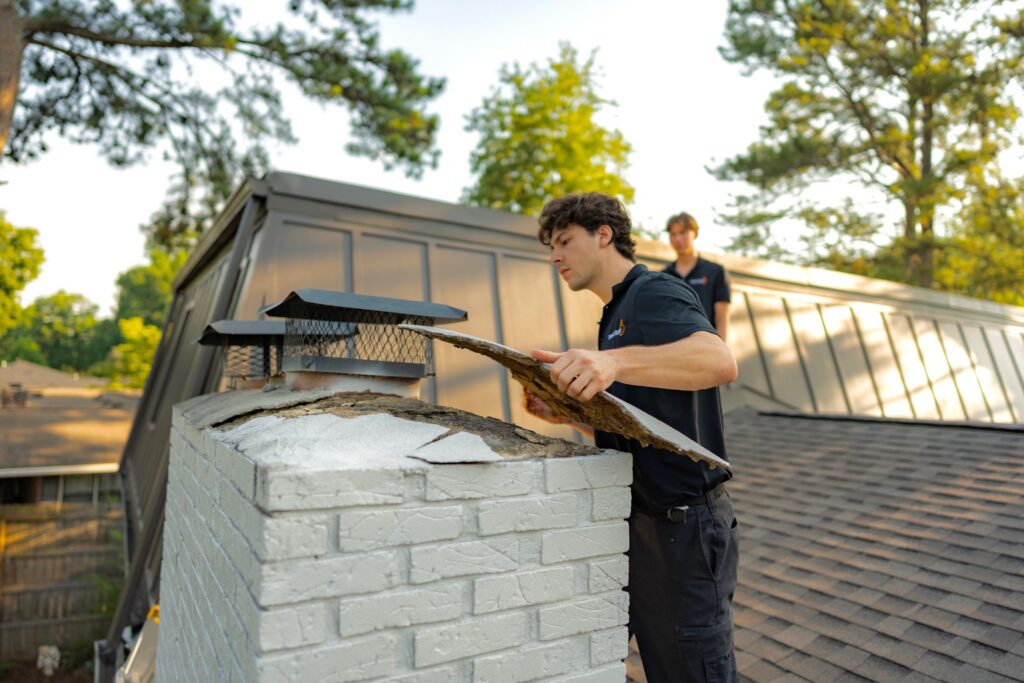
Whether you need a minor seal repair, a custom counter-flashing installation, or a complete tear-off and replacement, our certified chimney and roofing experts provide leak-proof flashing repairs and custom-mitered metal installations. Our team specializes in chimney repairing to ensure that your home remains safe and secure from potential hazards. We use high-quality materials and advanced techniques to deliver long-lasting results. Regular chimney liner maintenance is essential to prevent dangerous buildup and ensure proper ventilation. Firebox repairing is a crucial aspect of maintaining your chimney’s efficiency. Regular inspections can help identify issues early, preventing costly repairs down the line.
Why Chimney Flashing Failure Is a Major Threat
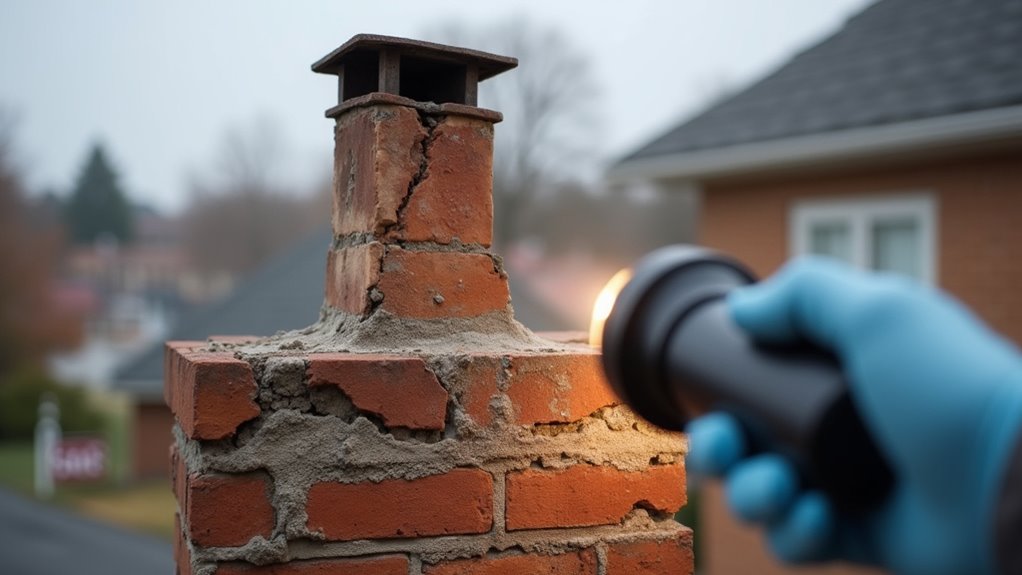
Water is a chimney’s worst enemy. When flashing fails, rainwater flows directly along the exterior of your stack and penetrates deep into your home’s structural framing:
- Rotted Roof Sheathing & Framing: Water leaking past flashing rots wooden roof rafters, attic joists, and ceiling drywall, leading to costly structural repairs.
- Toxic Mold & Mildew: Trapped moisture in attic insulation and wall cavities creates an ideal environment for black mold growth, compromising indoor air quality.
- Accelerated Masonry Decay: Leaking water soaks into the surrounding brick and mortar. During winter, freeze-thaw cycles cause bricks to spall and mortar to crumble.
- Ruined Ceilings & Drywall: Persistent leaks result in unsightly water stains, sagging drywall, and peeling paint on ceilings and walls adjacent to the chimney.
2. Our Complete Flashing Repair & Installation Solutions
We do not rely on temporary, messy caulk fixes. We engineer long-lasting, multi-layered metal flashing systems tailored to your roof pitch and masonry:
Step Flashing & Base Flashing
L-shaped metal pieces woven directly between individual roof shingles and bent up against the chimney stack to channel flowing rainwater downward onto the roof surface.
Custom Counter-Flashing (Embedded Flashing)
Heavy-duty metal panels cut directly into the masonry mortar joints and draped down over the step flashing. This creates an overlapping, impenetrable shield that moves naturally with your roof without breaking its waterproof seal.
Chimney Cricket / Saddle Installation
For chimneys wider than 30 inches, building codes require a small, angled peak called a cricket. A cricket diverts heavy runoff, snow, and ice melt around the sides of the chimney rather than letting water pool behind it.
Seamless Waterproof Sealant Application
All reglet cuts, seams, and metal corners are sealed with high-performance, UV-resistant elastomeric polyurethane sealants designed to withstand extreme thermal expansion and contraction.
Signs Your Chimney Flashing Needs Attention
Because flashing is located high up on the roofline, leaks often go unnoticed until interior damage occurs. Look out for these critical warning signs:
- Attic Water Stains: Discoloration, damp insulation, or water rings on roof boards surrounding the chimney stack.
- Water Dripping in the Firebox: Water dripping onto your damper, hearth floor, or firebox walls during heavy rain.
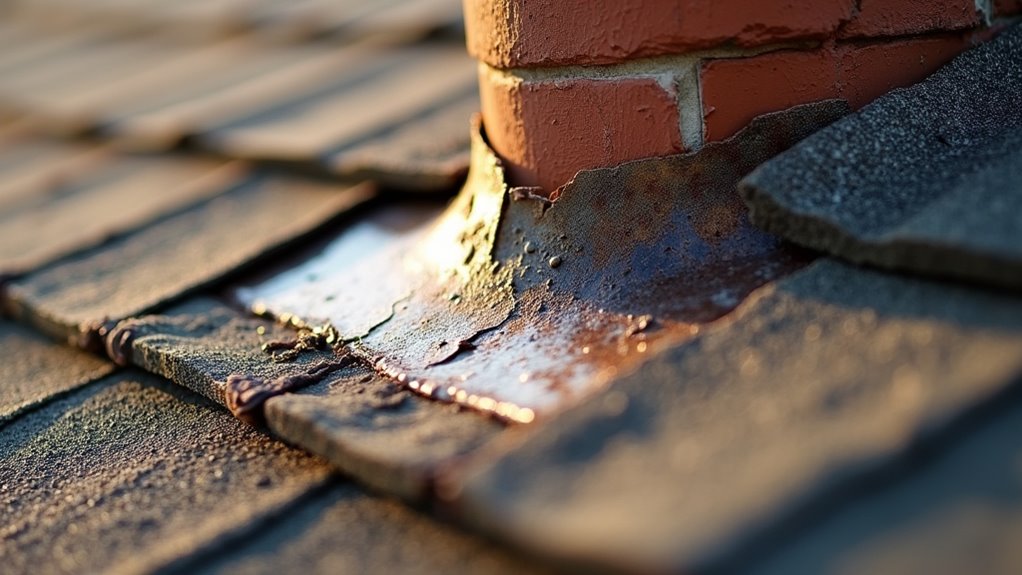
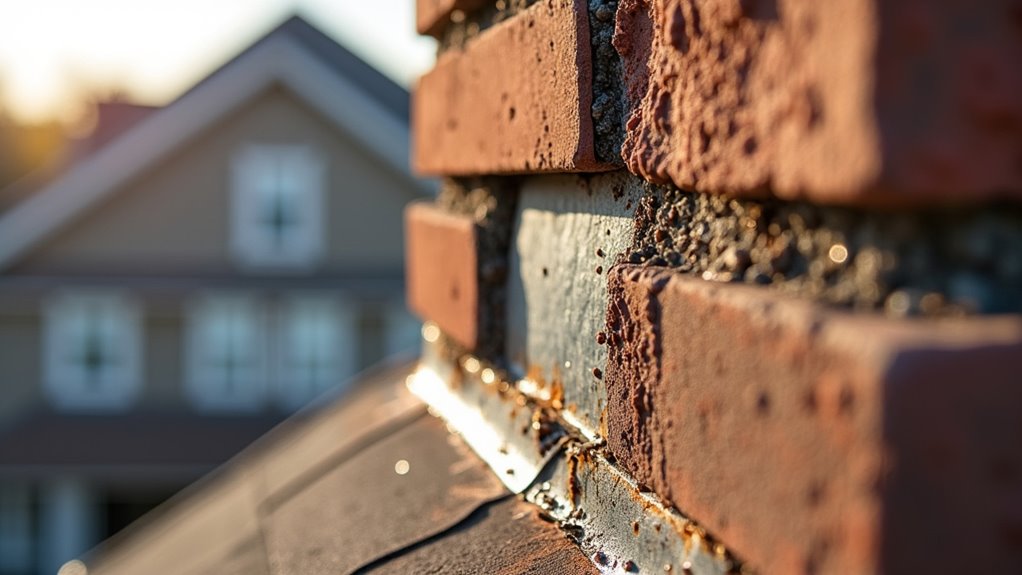
- Visible Rust, Gaps, or Loose Metal: Crinkled, corroded, or lifted metal plates along the base of your exterior chimney stack.
- Peeling Paint & Bubbling Drywall: Water stains or bubbling paint on living room ceilings or second-story walls adjacent to the chimney.
- Old, Tarred-Over Flashing: Layers of black roofing tar or messy caulk smeared over old metal, a temporary patch job that dries out, cracks, and fails quickly.