
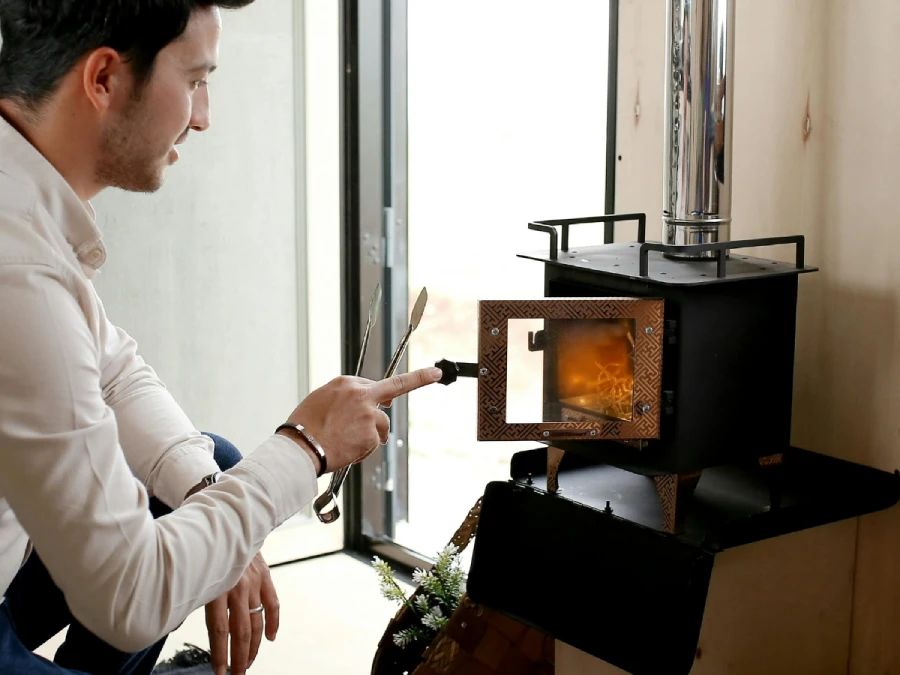
Why Wood Stoves Need Specialized Cleaning
Wood-burning stoves and free-standing inserts offer exceptional heating efficiency and cozy ambiance. However, because they burn wood at high heat for long durations, they produce fine ash, soot, and dangerous creosote glaze. Over time, restricted stovepipes and clogged baffle plates drastically reduce heat output and elevate your risk of a sudden stovepipe fire.
Unlike open masonry fireplaces, wood stoves are closed-combustion appliances. They rely on precise airflow and tightly fitted components to burn efficiently. Regular maintenance is essential for several reasons:
- Stovepipe Fire Prevention: High-efficiency wood stoves can deposit heavy creosote inside narrow single-wall or double-wall stovepipes. Removing this fuel prevents high-temperature pipe fires.
- Restoring Heating Efficiency: Soot buildup on internal baffle plates and secondary burn tubes restricts combustion air, dropping your heating output and wasting firewood.
- Preventing Smoke & Carbon Monoxide Leakage: Worn door gaskets, loose flue pipe joints, or ash buildup can cause toxic exhaust or carbon monoxide to leak into your home.
- Extending Appliance Lifespan: Acidic ash mixed with humidity corrodes cast iron, warps steel fireboxes, and destroys internal catalytic combustors.
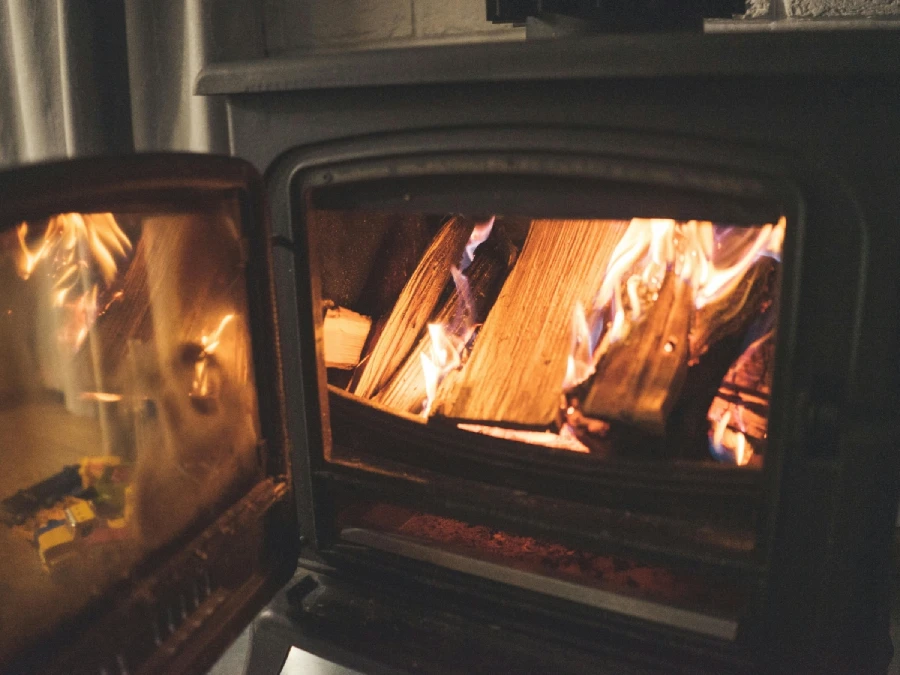
Our Multi-Point Wood Stove Service Process
Cleaning a wood stove requires much more than just brushing the pipe. We perform a complete top-to-bottom teardown and maintenance sweep:
- Stovepipe & Flue Sweeping: We disconnect or access the stovepipe, using specialized rotary flexible rods and nylon brushes to clean the entire pipe run up through the chimney cap.
- Baffle Plate & Burn Tube Removal: We carefully dismantle and clean internal firebrick linings, secondary air tubes, and baffle boards where fine fly-ash collects.
- Catalytic Combustor Servicing (If Applicable): For hybrid or catalytic stoves, we inspect, vacuum, and gently clean the combustor cell to restore its emissions performance.
- Door Gasket & Glass Restoration: We test the airtight seal on your door rope gaskets, replace worn seals, and scrub creosote glaze off ceramic door glass.
- Ash Pan & Firebox Vacuuming: Using industrial HEPA-filtered vacuums, we extract all accumulated ash from the lower firebox, air intake controls, and ash drawers without creating dust in your room.
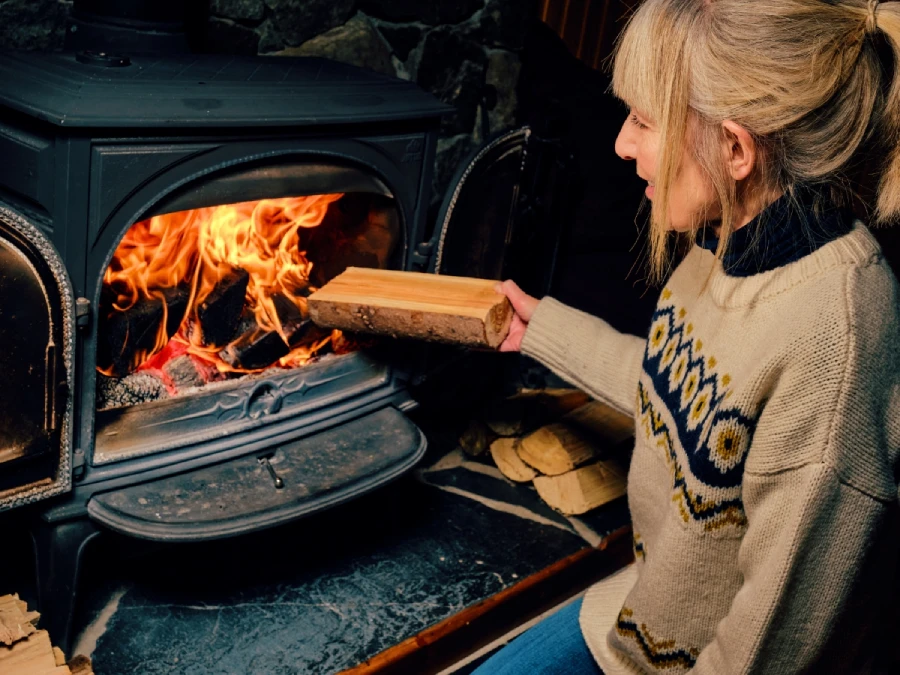
Signs Your Wood Stove Needs Immediate Cleaning
- Smoke Rolling Out During Loading: When you open the stove door, smoke spills into the room instead of drawing up the stovepipe.
- Glass Turning Pitch Black Fast: Heavy black soot coating the door glass indicates weak draft, restricted airflow, or excessive creosote buildup.
- Sluggish or Smoldering Fires: Wood struggles to catch fire, burns dull yellow or dark orange, or leaves large unburned logs behind.
- Clicking or Popping in the Stovepipe: Sounds inside the metal pipe can indicate small creosote ignitions or thermal expansion against heavy soot crust.
- Sluggish Air Controls: Primary air dampers or draft slides feel sticky or jammed due to ash accumulation inside the air channels.