Your chimney liner sits inside the flue. It runs from your fireplace’s smoke chamber or appliance connection up to the chimney top, where a top plate secures it and a rain cap finishes the opening. Clay tile shows stacked square or rectangular sections with visible joints. Stainless steel looks ribbed and corrugated or smooth and round. Cast-in-place forms a solid, continuous lining. Next come safe ways to spot your liner and the warning signs that call for a professional.
Key Takeaways
- A chimney liner sits inside the flue, running from the appliance connection or smoke chamber up to the chimney top.
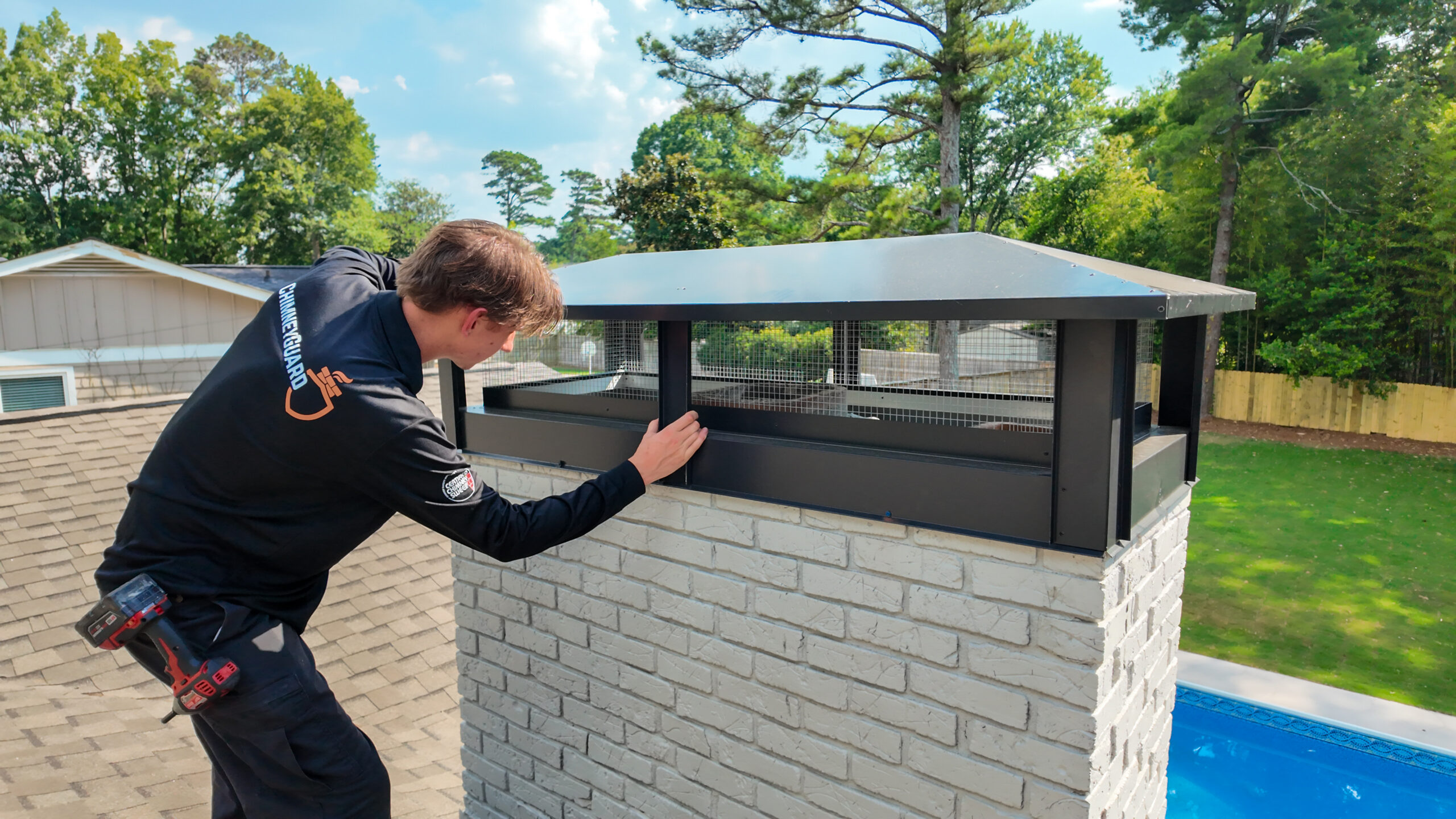
- At the roofline, a top plate secures the liner, and a rain cap finishes the chimney opening.
- Flexible stainless steel liners look like corrugated, ribbed tubes, sometimes wrapped in insulation and mesh.
- Rigid stainless steel liners have smooth metal walls, while clay tile liners show stacked square or rectangular sections with visible joints.
- Cast-in-place liners appear as solid, continuous linings, and camera inspections can confirm hidden cracks, gaps, or offsets.
What does a chimney liner look like and where is it located
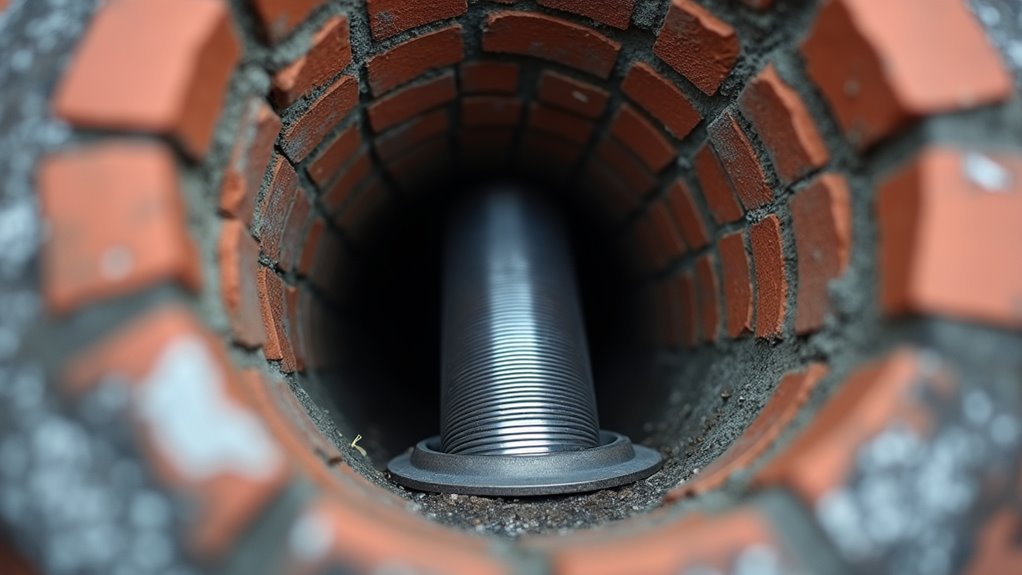
A chimney liner is located inside the flue, the passage that carries smoke and combustion gases from your fire or appliance to the chimney outlet. It runs from the appliance connection or smoke chamber up to the chimney top, where a top plate secures it and a rain cap finishes it.
How do the main liner types differ in appearance
Liner types differ mainly in surface and construction: flexible stainless steel looks like a corrugated tube, rigid stainless steel has smooth metal walls, clay tile appears as joined square or rectangular sections, and cast-in-place forms a solid, continuous lining. If you’re asking where is the chimney liner, look inside the flue, running from the appliance connection or smoke chamber to the top.
| Liner Type | Visible Characteristics |
|---|---|
| Flexible stainless steel | Corrugated, ribbed tube; may be wrapped in insulation and mesh |
| Rigid stainless steel | Smooth metal walls in straight sections |
| Clay tile | Square or rectangular tiles joined in sections |
| Cast-in-place | Solid, continuous lining without large irregularities |
Check clay tiles for cracks, broken pieces, or gaps between sections. On metal liners, watch for sharp bends that restrict the passage. A camera inspection reveals concealed damage, so have a qualified professional confirm its condition and sizing.
Where does a chimney liner sit inside the chimney
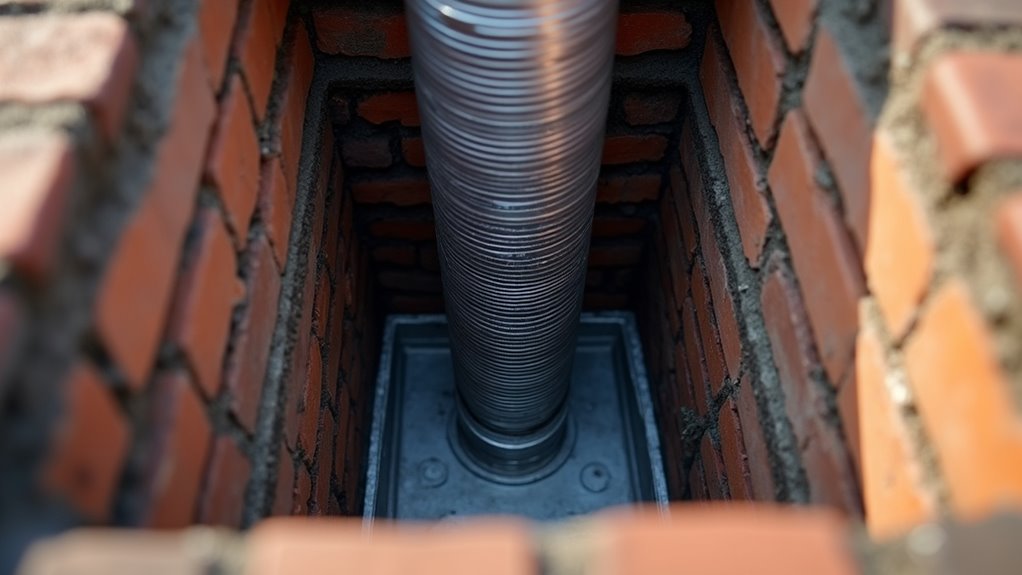
A chimney liner sits inside the flue, forming the passage between your fire or appliance and the chimney outlet. It runs from the connection point along the chimney’s interior to the top.
The lower end depends on your system. In a fireplace, the liner may end at a bottom plate above the smoke chamber. With some appliances, it connects through a tee, adapter, or vent connector. At the roofline, a top plate or support usually secures it, and a rain cap finishes the opening.
You won’t see most of the liner, so don’t assume it’s intact. A qualified chimney professional can use a camera inspection to confirm its path and condition.
What sets a clay tile liner apart by sight
A clay tile liner is made of rectangular or square tiles stacked in sections up the flue, with visible joints where each section meets the next. Metal liners look different. Flexible stainless-steel liners show a corrugated, ribbed surface, and rigid metal liners have smooth walls forming a continuous round tube. To inspect a clay liner, focus on the joints and tile faces. Cracked or broken tiles and gaps between sections are warning signs, since they can let heat and combustion gases reach the chimney structure. Damage often hides out of view, so a camera inspection helps reveal it. If you spot defects, have a qualified chimney professional evaluate whether you’ll need relining.
How does a stainless steel liner appear inside the flue
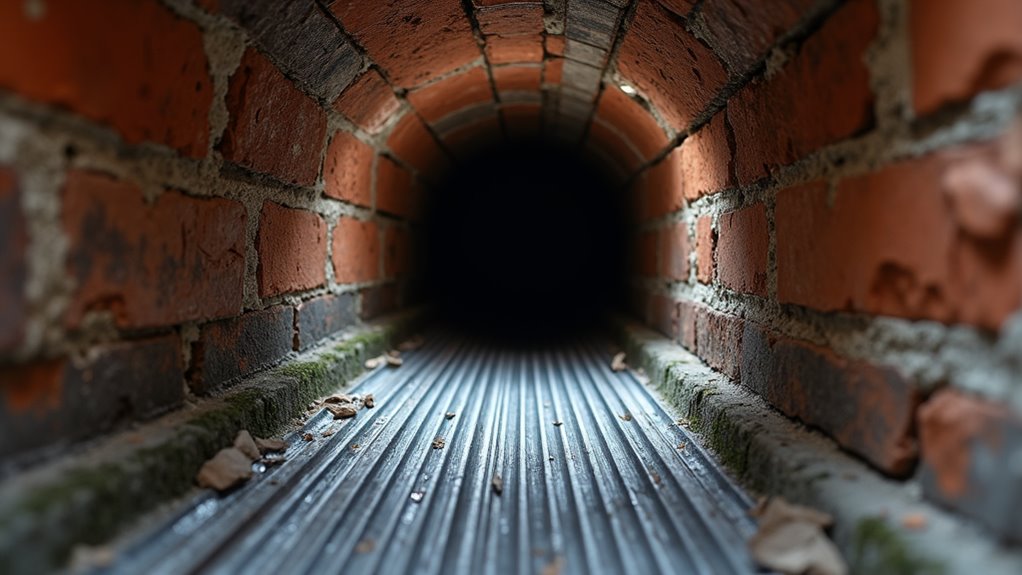
Inside the flue, a stainless-steel liner appears as a narrow metal tube or sleeve running vertically through the chimney. A flexible liner has a corrugated, ribbed surface that lets it follow straight runs and modest offsets. A rigid liner shows smooth metal walls. It may be round or oval. At the chimney top, you’ll usually find a metal top plate or support securing the liner and a rain cap finishing it. At the bottom, it often ends at a bottom plate above the smoke chamber or connects through a tee or adapter. Some liners wear insulation and protective mesh. Watch for sharp bends restricting the passage, and use a camera inspection to confirm hidden conditions.
How can you see your own liner safely
You can see your own liner safely by inspecting it from below with a flashlight once the system is cold, and by checking the top from the ground with binoculars, without climbing onto the roof. Follow these steps:
Check your chimney liner safely: inspect from below with a flashlight once it’s cold, and view the top from the ground with binoculars.
- Let the fireplace or appliance cool completely, and wear gloves, eye protection, and a dust mask before disturbing soot.
- Open the damper and shine a bright flashlight upward; look for corrugated stainless steel, smooth metal walls, or joined clay tiles.
- Check the lower end for a bottom plate above the smoke chamber or a tee, adapter, or vent connector.
- From the ground, use binoculars to spot a rain cap or top plate at the chimney’s crown.
You can’t see concealed cracks, gaps, or offsets this way. Schedule a camera inspection with a qualified chimney professional to evaluate the full flue.
How do you identify the liner you have
How can a quick look up the flue tell you what’s inside? A quick look shows the liner’s surface and joints, which reveal whether it’s clay tile, flexible stainless steel, rigid metal, or cast-in-place. Rectangular or square clay tiles joined in sections mean a traditional masonry liner. A ribbed, corrugated metal tube means flexible stainless steel, while smooth metal walls indicate a rigid system. A seamless, solid coating suggests a cast-in-place liner, which shouldn’t show large irregularities. At the roofline, look for a top plate and rain cap, which often signal a metal relining system. Note any cracked tiles, gaps between sections, or visible damage, but don’t rely on appearance alone. A qualified chimney professional can confirm material, size, and condition with a camera inspection and tell you whether it suits your appliance and current fuel.
Identify and Inspect Your Chimney Liner
You do not need to climb onto the roof or look deep into the flue to figure out what type of liner your chimney has. ChimneyGuard offers chimney inspections that can evaluate internal flue components and identify deterioration that is difficult to see from the fireplace opening. Call (877) 804-8273 to schedule an inspection.
Frequently Asked Questions
How Do I Know if My Chimney Liner Is Properly Sized?
You’ll know your liner’s properly sized by measuring its flue dimensions and height, then comparing them with your appliance or fireplace requirements. For fireplaces, CSIA guidance says round flues need at least 1/12 of the opening area, square or standard rectangular flues 1/10, and rectangular flues with 2:1 or greater aspect ratio 1/8. Don’t guess: have a qualified chimney professional verify sizing, since incorrect sizing can compromise venting and operation.
What Size Flue Does My Fireplace Opening Require?
Your flue’s cross-sectional area depends on its shape and your fireplace opening’s area. For a round flue, you’ll need at least 1/12 of the opening area. Square or standard rectangular flues need at least 1/10, and rectangular flues with a 2:1 or greater aspect ratio need at least 1/8. Measure your opening’s width and height, multiply, then compare. Have a qualified chimney professional confirm your liner’s sizing before you burn.
When Should a Damaged Chimney Liner Be Replaced or Relined?
You should consider relining when a camera inspection reveals cracked or broken clay tiles, gaps between tile sections, or damage from a chimney fire. You’ll also need an evaluation if you switch fuel types, since your liner must suit the appliance and fuel. Don’t ignore improper sizing or installation issues. Have a qualified chimney professional assess the material, dimensions, height, and offsets, then determine whether you need repair or replacement.
Does Switching Fuel Types Require a Different Chimney Liner?
It can. When you switch fuel types, you’ll need a qualified chimney professional to evaluate whether your existing liner still suits the new fuel and appliance. Your liner’s material and system must match the appliance, fuel, and installation requirements, and its size directly affects venting. Schedule a camera inspection so your sweep can check material, dimensions, height, offsets, and damage. If it doesn’t qualify, you’ll need to reline before operating.
Does an Insulated Liner Improve Fireplace Efficiency and Safety?
Yes, it can help with both. A properly sized liner contains combustion byproducts and directs them up and out, and it can improve your fireplace’s heat transfer and efficiency. Insulation wrapped around some metal liners separates the liner from your chimney structure, adding protection from heat and gases. You’ll still need a system that suits your appliance and fuel, so have a qualified chimney professional confirm sizing and proper installation.