You’ll spot a damaged chimney liner through seven key signs: tile shards in your firebox, smoke spilling into the room, weak draft, lingering smoky odors, white efflorescence on exterior brick, rust holes in a metal liner, and a sounding carbon monoxide alarm. Treat CO alarms and visible breaches as emergencies. Cracked tiles let heat, creosote, and gases reach surrounding masonry. A clean firebox doesn’t prove your liner’s sound. Damage often hides higher up, and knowing where to look matters.
Key Takeaways
- Tile shards or flakes in the firebox mean the clay liner is shaling and breaking apart, leaving gaps in the flue.
- Smoke spilling into the room or a weak draft suggests cracked tiles or separated joints are disrupting the smoke path.
- Persistent smoky or creosote odors, even days after a fire, indicate combustion byproducts are escaping through liner cracks.
- White efflorescence, crumbling mortar, or damp stains near the chimney signal moisture penetrating through a damaged liner.
- A sounding carbon monoxide alarm or visible rust holes in a metal liner require immediate action and professional inspection.
What are the signs your chimney liner may be damaged
Signs your chimney liner may be damaged include tile shards or rust flakes in the firebox, smoke spilling into the room, and weak draft. Because most of the liner is hidden inside the flue, you’ll usually spot these indirect clues first. Persistent smoky odors, white efflorescence on exterior brick, and rust on the damper can also point to a damaged chimney liner. However, these symptoms can stem from cap, crown, or flashing defects, so don’t assume the cause. A cracked chimney liner can let carbon monoxide escape, so if your CO alarm sounds, leave immediately and call emergency services. Stop using the fireplace and schedule a Level 2 inspection with a video scan to confirm the liner’s condition.
Which signs of a damaged chimney liner are most serious
The most serious signs of a damaged chimney liner are a carbon monoxide alarm, smoke entering your living space, and visible breaches such as missing tiles or holes in a metal liner. These chimney liner problems can let combustion gases escape the flue. Act immediately.
| Sign | Your Action |
|---|---|
| CO alarm sounds | Leave home; call emergency services |
| Smoke near mantel or chimney breast | Stop using fireplace; schedule inspection |
| Tile shards or fragments | Stop use; request video scan |
| Rust holes in metal liner | Stop use; request Level 2 inspection |
| Persistent idle odors | Schedule inspection before next fire |
After a CO alarm, don’t re-enter until responders say it’s safe. For any other sign, shut down the connected appliance until a qualified inspector confirms the liner is sound.
What do cracked clay tiles tell you
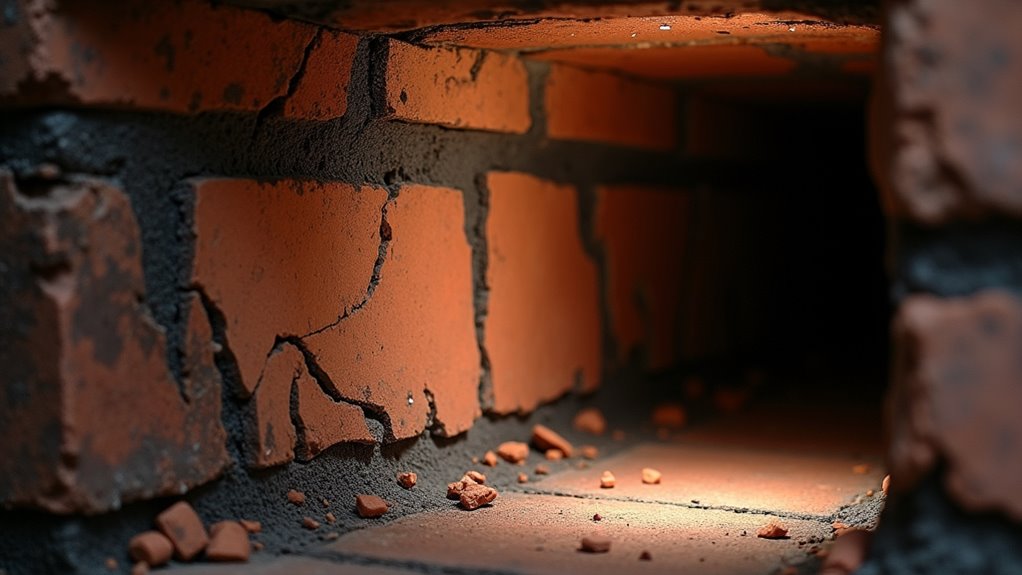
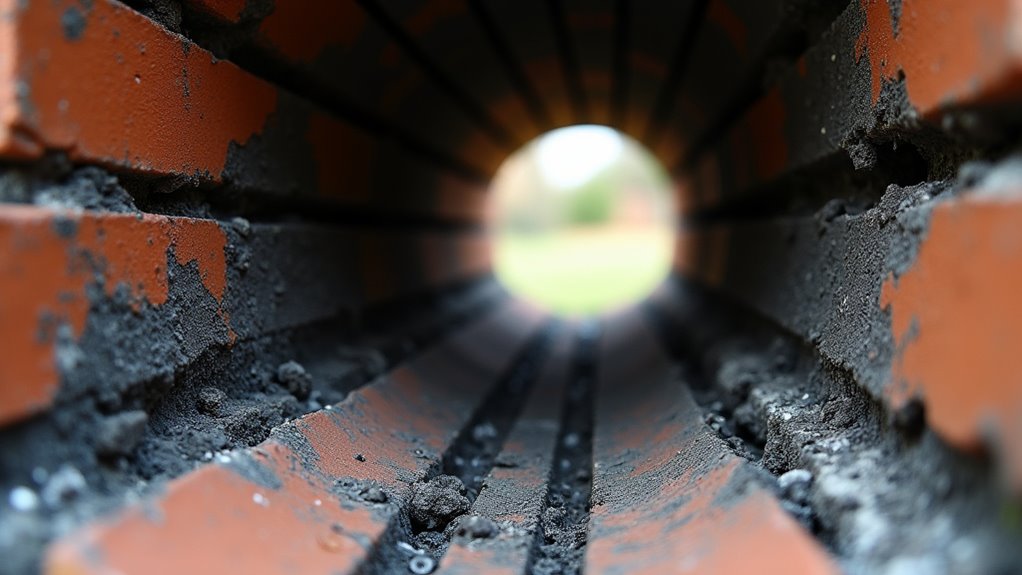
Cracked clay tiles tell you the flue liner no longer forms a continuous, sealed path for smoke and combustion gases. Gaps let heat, creosote, moisture, and carbon monoxide reach surrounding masonry or nearby spaces. You may notice tile flakes or shards in the firebox or cleanout, a sign called shaling. Open joints and missing mortar create similar breaches. Don’t assume the flue is sound because you can’t see damage from the hearth. Cracks often sit higher, out of view. Stop using the fireplace or connected appliance until a qualified sweep inspects it. Request a camera inspection to locate cracks, shifted joints, and gaps. If you’ve had a chimney fire or suspect damage, a Level 2 inspection with a video scan is the right step.
Why do tile shards in the firebox signal trouble
Tile shards in the firebox signal trouble because they show the flue liner is breaking apart from the inside. This is shaling: clay tiles flake, crack, and shed fragments that fall down the flue into the firebox or cleanout. Each piece you find marks a gap where heat, smoke, and combustion gases can reach the surrounding masonry.
Small shards don’t mean minor damage. Debris often falls from sections you can’t see from the hearth, and a clean firebox doesn’t prove the liner is sound. Cracked tiles, open joints, and missing mortar can hide anywhere along the flue’s length.
If you spot fragments, stop using the fireplace and schedule a camera inspection. A video scan reveals hidden cracks, shifted joints, and gaps before they create fire or carbon monoxide hazards.
How does poor draft point to a failing liner
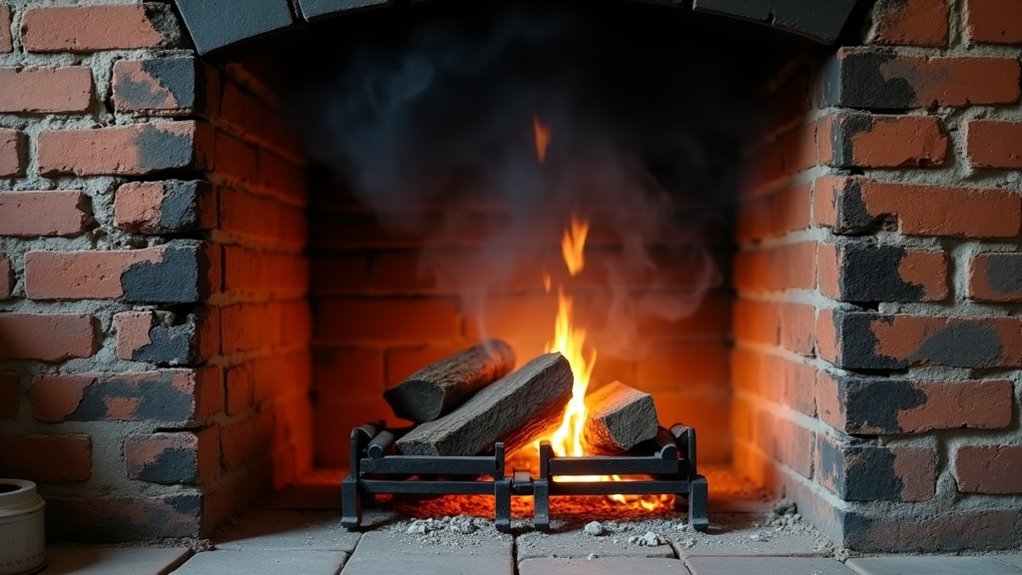
Poor draft points to a failing liner because cracked tiles, separated joints, and gaps in the liner disrupt the smoke path, letting air leak in and weakening the draft that pulls exhaust upward. As a result, smoke may spill into the room or a fire may struggle to draw, signs that your flue is no longer moving combustion gases up and out efficiently. A damaged or obstructed liner can also change the flue’s effective shape, making fires hard to start or keep burning steadily. If you notice smoke near the mantel or chimney breast, treat it as a possible flue breach and get it evaluated promptly. Draft problems can also stem from other causes, such as blockages or pressure imbalances. Don’t guess. Schedule an inspection to pinpoint the source before you keep using the fireplace.
What odors and stains reveal liner damage
Smoke or creosote odors when the fireplace hasn’t been used in days, along with chalky white deposits, crumbling mortar, spalling brick, and damp patches or staining near the chimney, can reveal liner damage. Lingering odors can mean combustion byproducts are migrating through cracks in damaged flue walls into masonry or nearby spaces. You’ll often notice these smells more in humid weather or during long idle periods. Still, odors alone don’t confirm liner damage, since other chimney or moisture problems can produce them.
Check the chimney’s exterior for chalky white deposits called efflorescence. They form when moisture carries mineral salts through brick, sometimes through a compromised liner. Also look for crumbling mortar, spalling brick, and damp patches or staining near the chimney. Because caps, crowns, and flashing can cause similar signs, schedule a qualified inspection before you keep using the fireplace.
What should you do when you notice these signs
Stop using the fireplace or any connected appliance as soon as you notice signs of liner damage, and keep it out of service until a qualified professional inspects the chimney. If your carbon monoxide alarm activates, treat it as an emergency: leave the home, call emergency services, and don’t re-enter until responders say it’s safe.
For non-emergency signs, schedule a Level 2 inspection with a video scan. A camera reveals cracks, shifted joints, and gaps you can’t see from the hearth. Debris, odors, stains, and draft problems can also stem from cap, crown, or flashing defects, so ask the inspector to evaluate the entire chimney system. Note when symptoms appear, such as after rain or in humid weather, to help pinpoint the source. Afterward, maintain annual inspections.
Have Suspected Liner Damage Inspected
Tile fragments, unusual odors, poor draft, staining, or visible liner deterioration deserve a closer look. ChimneyGuard can use a chimney inspection to examine the flue and determine whether liner repair or replacement is necessary. Call (877) 804-8273 before continuing to use a chimney with suspected liner damage.
Frequently Asked Questions
How Much Does It Typically Cost to Repair or Replace a Chimney Liner?
Costs vary widely, but you’ll typically pay a few hundred dollars for minor clay-tile joint repairs and roughly $2,500 to $7,000 to install a stainless steel replacement liner. Cast-in-place systems can cost more. Your price depends on flue size, height, access, and damage. Before you get quotes, schedule a Level 2 inspection with a video scan so you’re repairing the actual defect. Don’t use a connected appliance until it’s fixed.
How Long Does a Chimney Liner Usually Last Before Needing Replacement?
Your liner’s lifespan depends on its material: clay tile often lasts 50 years or more, stainless steel typically runs 15 to 20-plus years, and aluminum may need replacement in 5 to 15. Don’t rely on age alone; moisture shortens it. Watch for tile shards, rust flakes, smoke spillage, or lingering odors. Schedule annual inspections, and request a Level 2 video scan after a chimney fire, fuel change, or suspected damage.
Can I Install a New Chimney Liner Myself, or Do I Need a Professional?
You can sometimes install a liner yourself, but you’re safer hiring a qualified professional. A damaged or poorly fitted liner can leak combustion gases, including colorless, odorless carbon monoxide, into your home. Before any installation, you’ll need a Level 2 inspection with a video scan to reveal hidden cracks, shifted joints, or moisture problems. Until a certified pro confirms the flue’s sound, don’t use the connected fireplace or appliance again.
Does Homeowners Insurance Cover Chimney Liner Damage or Replacement?
It depends on the cause and your policy. Insurers often cover sudden, accidental damage, like a chimney fire, lightning strike, or fallen tree, but they usually won’t pay for gradual wear, corrosion, shaling, or neglect. Review your policy and call your agent. After a chimney fire or suspected damage, stop using the fireplace, photograph everything, and schedule a Level 2 inspection with a video scan to document the liner’s condition.
What Type of Chimney Liner Material Is Best for My Fireplace?
There’s no single best liner; the right choice depends on your fuel, appliance, and flue size. Stainless steel suits most wood, gas, and oil systems and resists corrosion. Clay tile’s affordable and durable for open masonry fireplaces but can crack under rapid heating. Cast-in-place liners can seal and strengthen deteriorated flues. Before choosing, have a certified sweep inspect your chimney with a video camera and confirm the liner’s properly sized.