Yes, you can vent a gas fireplace insert through an existing masonry chimney, but you’ll need an approved liner system. NFPA 211 requires an approved lining, clay, a listed UL 1777 system, or equivalent corrosion-resistant material. Typically, you’ll install a continuous flexible stainless steel liner sized to your manufacturer’s minimum diameter, running from the appliance collar to a top termination cap. Before you commit, several flue conditions determine whether your installation goes smoothly.
Key Takeaways
- Yes, a gas fireplace insert can vent through an existing masonry chimney using an approved liner system rather than the bare flue.
- NFPA 211 requires an approved lining made of clay, a listed UL 1777 system, or equivalent corrosion-resistant material.
- A continuous flexible stainless steel liner is the most common arrangement, running from the appliance collar to a top termination cap.
- The flue must be inspected for cracked tiles, missing mortar, offsets, debris, and proper size before installation.
- Flues too small, offset, narrowed, cracked, or corroded can prevent safe installation and increase carbon monoxide risk.
Can a gas fireplace insert vent through an existing masonry chimney
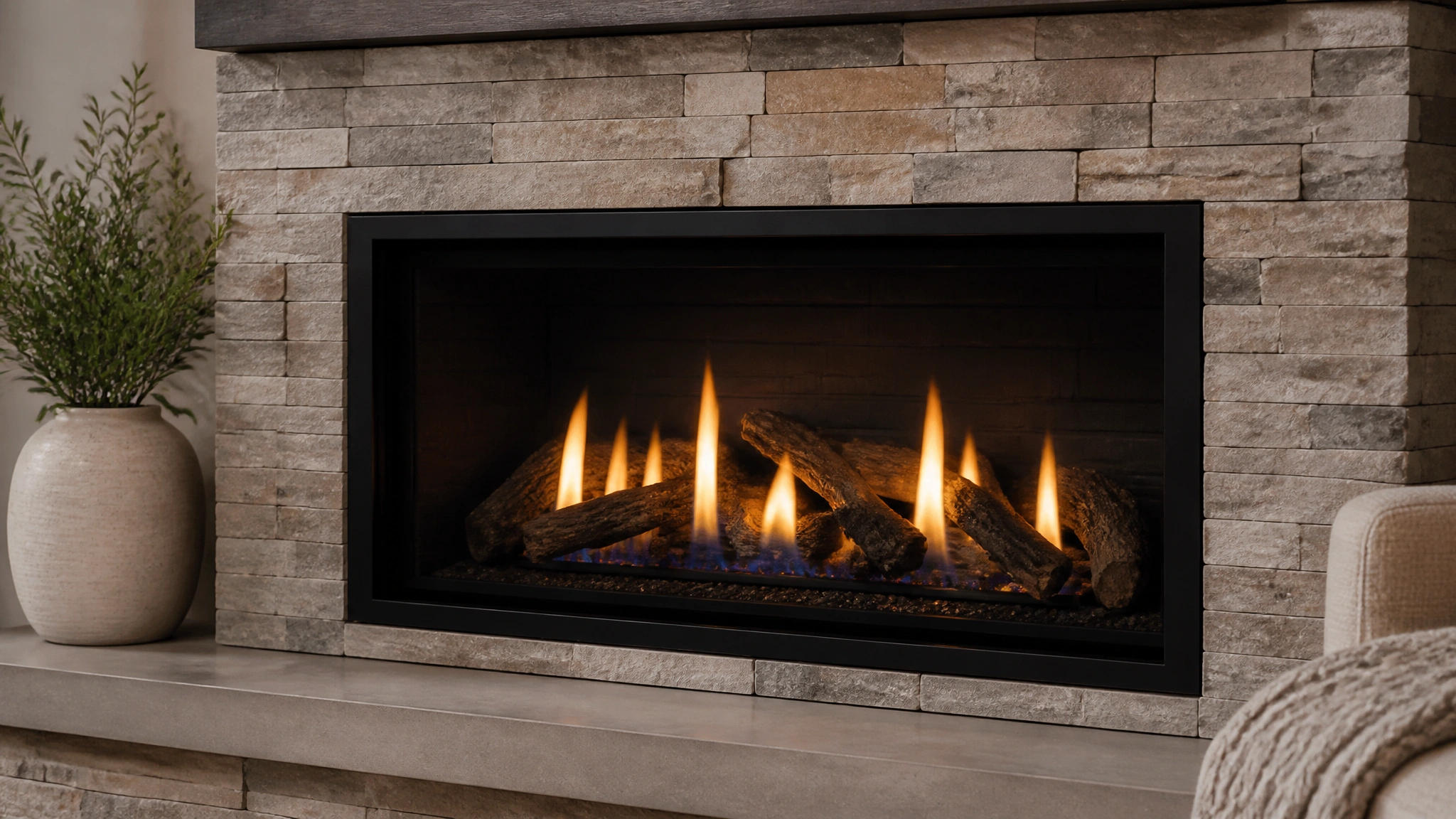
Yes, you can vent a gas fireplace insert through an existing masonry chimney, but you’ll rarely use the flue as a bare exhaust path. Instead, you’ll run an approved liner system through the chimney, using the masonry as the route rather than the direct vent. For an existing chimney gas insert, you’ll typically install a continuous flexible stainless steel liner from the appliance collar to the top termination cap. This gas insert masonry chimney arrangement often uses co-linear liners for exhaust and intake, sized to match your appliance’s requirements. NFPA 211 requires an approved lining, clay, a listed UL 1777 system, or equivalent corrosion-resistant material. Because gas fireplace chimney venting depends on flue condition, appliance category, and local code, you’ll usually reline unless the manufacturer states otherwise. Choosing between gas logs and inserts depends on heating efficiency, installation needs, chimney compatibility, and the look you want for your fireplace.
How does the existing chimney configuration affect compatibility
Your existing chimney’s configuration directly determines whether you can vent a gas insert through it and what liner system you’ll need. You’ll need to assess the flue size, height, and interior condition, since these dictate liner compatibility and proper drafting. If your gas insert flue is too narrow, offset, or cracked, you’ll require a flexible stainless steel liner sized to the appliance’s specifications. Measure the flue’s clear opening and verify it matches the manufacturer’s minimum diameter requirements. Chimney height affects draft, so short or oversized flues can compromise performance. Check for missing mortar joints, tile offsets, and corrosion that force relining to meet NFPA 211 standards.
What should be checked in the flue before an insert is installed
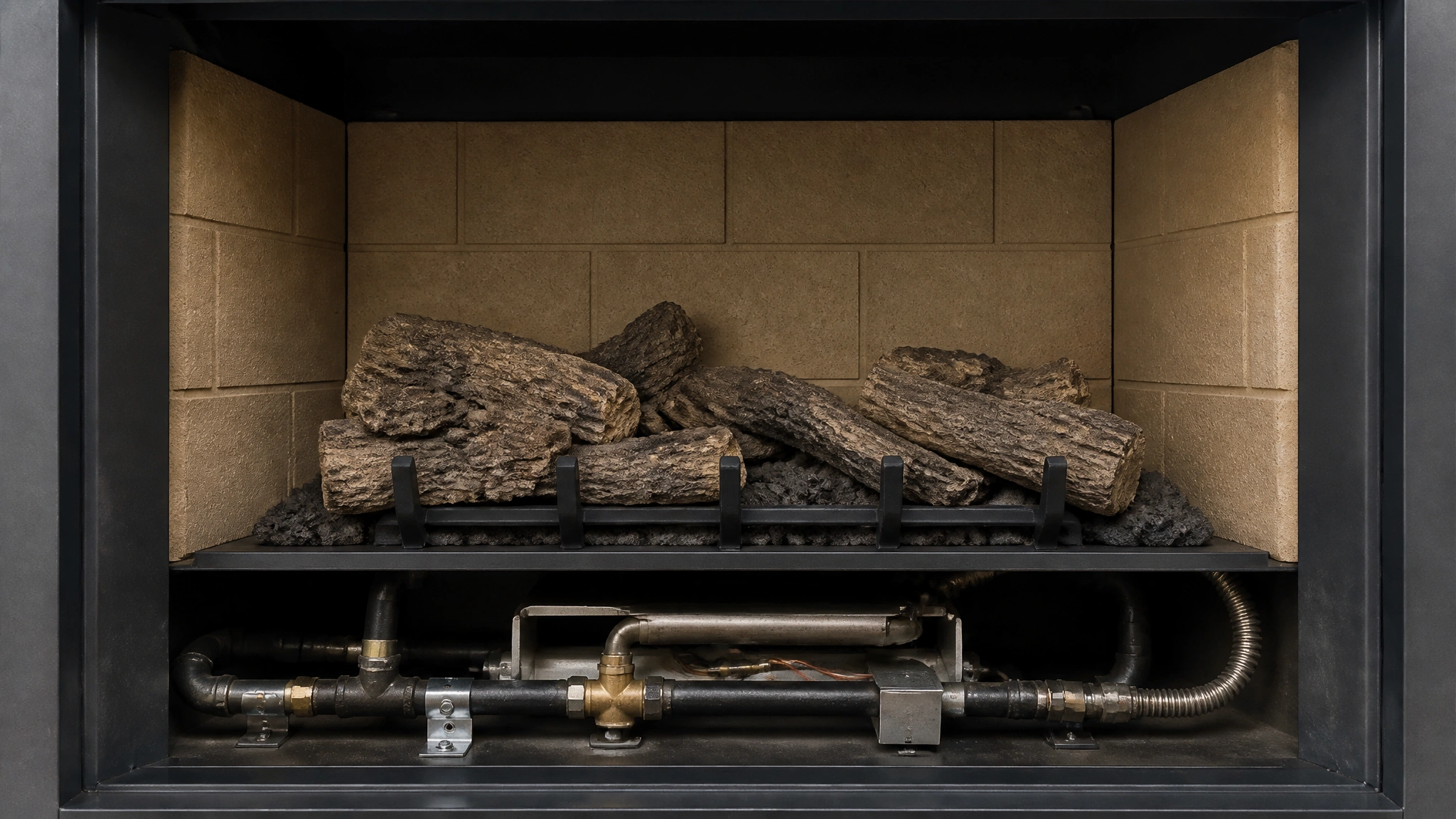
Inspect the flue for the specific defects that dictate whether relining is required. Look for cracked or spalled flue tiles, missing mortar joints, and offset tiles that can obstruct or disrupt draft. Check the flue size against the appliance and liner requirements, since a mismatch prevents proper drafting. Confirm the flue is continuous and free of debris, creosote, or obstructions that block the vent path. Evaluate the masonry for signs of water intrusion, deterioration, or corrosion that compromise integrity. Verify the chimney can accept a continuous stainless steel liner from the insert collar to the termination cap. If you find any of these defects, plan for a listed, code-compliant liner system before proceeding with installation.
Which venting arrangements are commonly used with gas inserts
A gas insert vents through a masonry chimney by running an approved liner system from the appliance collar up through the existing flue to a proper termination cap. The liner acts as the sealed vent path, while the masonry chimney serves only as the chase.
| Venting Arrangement | Typical Application |
|---|---|
| Flexible stainless steel liner | Sealed inserts routed through the flue |
| Co-linear liners | Separate exhaust and intake paths |
| Manufacturer-approved equivalent | Direct-vent retrofit systems |
| Top termination cap | Required assembly at chimney top |
You’ll connect the liner continuously, size it to match the appliance, and seal the annular space. Direct-vent and B-vent inserts each demand the correct liner arrangement per the manufacturer’s instructions and local code.
When can chimney size or condition prevent a straightforward installation
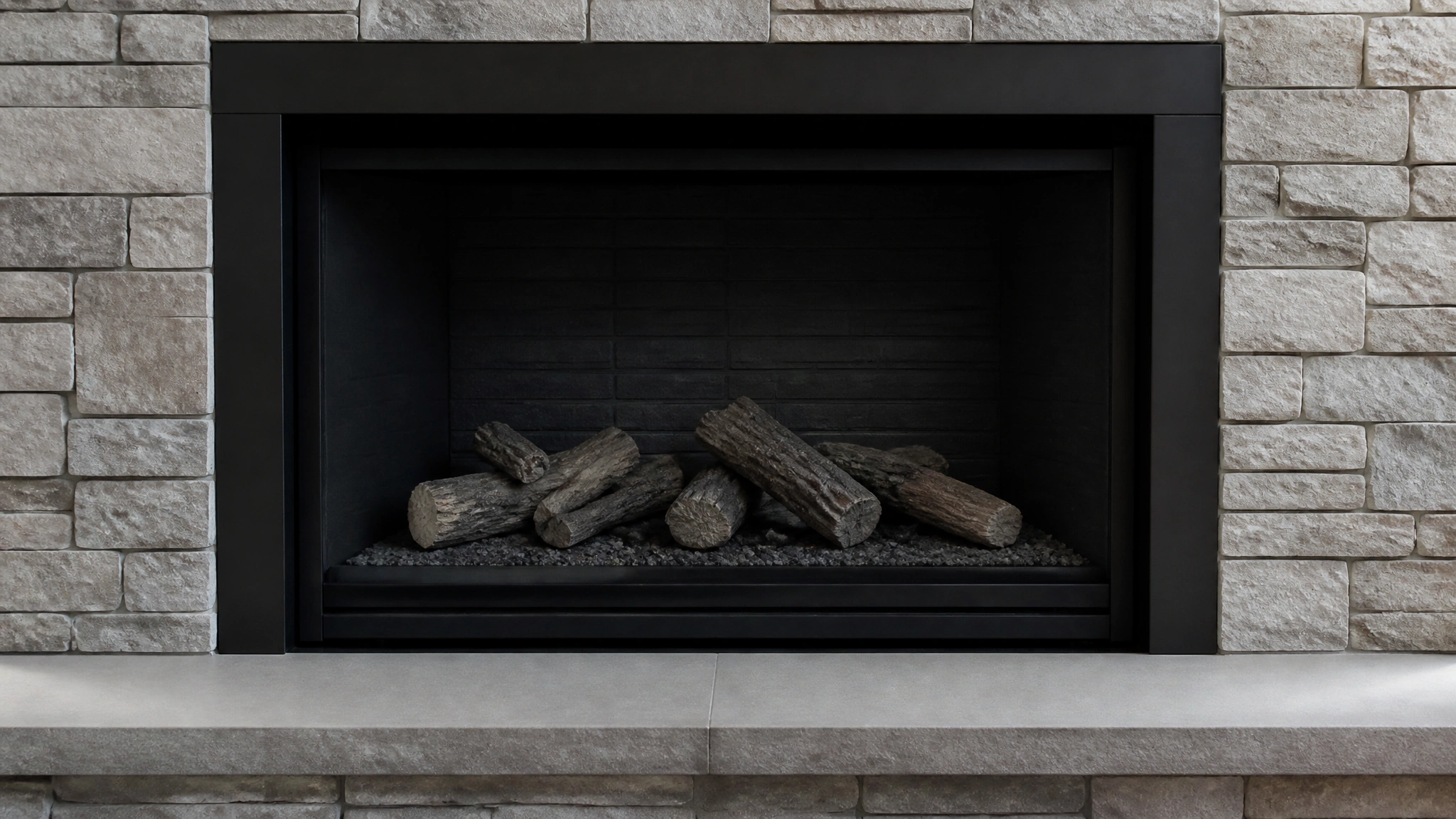
Chimney size or condition prevents a straightforward installation when the flue doesn’t meet appliance and code requirements. If your flue’s too small to accept the liner and required annular space, you can’t run a properly sized, continuous vent. Offset tiles, tight bends, or a narrowed passage can stop the liner from reaching the termination cap. Condition matters just as much: cracked tiles, missing mortar joints, spalling, or corrosion signal a flue that won’t safely contain vent gases. If an inspection reveals these defects, you’ll need relining or repairs before proceeding. Undersized or deteriorated chimneys can also disrupt draft, raising carbon monoxide risk. Always verify the flue against the manufacturer’s specifications and NFPA 211 before installing.
How do blockages damage and moisture affect gas venting
Blockages and moisture directly threaten safe gas venting inside your chimney. Debris, nests, or collapsed flue tiles restrict draft, forcing exhaust gases back toward your living space and raising carbon monoxide risk. When you rely on an unlined or damaged flue, moisture combines with combustion byproducts to form corrosive condensate that attacks masonry, mortar joints, and any liner not rated for those gases. Over time, this corrosion cracks tiles, erodes mortar, and creates leakage paths that undermine proper drafting. Offset or displaced tiles compound the problem by obstructing the liner route. NFPA 211 requires a continuous, corrosion-resistant liner sized for your appliance precisely because of these hazards. Before installation, you need a qualified inspection to identify blockages, damage, and moisture intrusion.
When should the chimney be evaluated before choosing an insert
Evaluate the chimney before you select the appliance, not after. An early inspection tells you the flue’s actual size, condition, and whether relining is required for the insert category you’re considering.
Have the flue evaluated for cracks, missing mortar joints, offset tiles, blockages, and moisture damage, since any of these can force relining. You’ll also need the flue’s dimensions to confirm it’ll accommodate the liner system your appliance demands.
Match the evaluation findings to the manufacturer’s instructions and local code before committing. When you know the chimney’s condition and drafting capability up front, you can choose an insert that vents safely and installs without costly surprises. Chimney issues affecting gas fireplaces can reduce efficiency and create safety risks, making regular inspections and timely repairs essential.
Check the Chimney Before Choosing the Gas Insert
The existing chimney can be useful for a gas insert, but the appliance still has to fit the firebox and its approved vent system has to fit through the flue from the insert to the termination. ChimneyGuard provides gas fireplace inspections, fireplace insert installation, and chimney liner repair and replacement throughout the Greater Atlanta area. Call (877) 804-8273 to have the fireplace and chimney evaluated before choosing an insert or venting system.
Frequently Asked Questions
How Much Does Relining a Masonry Chimney for a Gas Insert Cost?
You’ll typically spend between $1,500 and $4,000 to reline a masonry chimney for a gas insert, though your exact cost depends on liner type, chimney height, and condition. If cracks, offset tiles, or missing mortar joints need repair first, you’ll pay more. Always factor in a professional inspection, proper liner sizing, sealing, and code-compliant termination. Don’t cut corners here, improper venting can create carbon monoxide and drafting hazards.
Do Gas Fireplace Inserts Require a Permit for Installation?
Yes, you’ll typically require a permit to install a gas fireplace insert. Local building codes and your jurisdiction dictate the requirement, and most areas require permits for gas line work, venting, and appliance connections. You’ll usually need an inspection to verify code-compliant installation, proper liner venting, sealing, and clearances. Check with your local building department and follow the manufacturer’s instructions. A qualified installer can obtain the permit and ensure safe, compliant operation.
How Long Does a Stainless Steel Chimney Liner Typically Last?
You’ll typically get 15 to 20 years from a quality stainless steel chimney liner, though many manufacturers back theirs with lifetime warranties. Your actual lifespan depends on the liner grade, vent gas corrosivity, proper sealing, and how well you maintain it. Since gas exhaust produces corrosive condensate, you’ll want a liner rated for your appliance’s category. Schedule regular inspections, and you’ll catch corrosion or damage before it becomes a safety hazard.
Can I Install a Gas Fireplace Insert Myself?
You shouldn’t install a gas fireplace insert yourself unless you’re qualified. Improper venting can create carbon monoxide or performance hazards, so a qualified installer is typically needed. You’ve got to match the appliance category, liner type, and termination to the manufacturer’s instructions and local code. You’ll also need to evaluate the flue, seal the annular space, and support the liner correctly. Professional installation strongly supports safe operation and proper draft.
Do Vent-Free Gas Inserts Require a Carbon Monoxide Detector?
Yes, you should install a carbon monoxide detector with any vent-free gas insert. Since these units release combustion byproducts directly into your living space, you’re relying on complete combustion for safety. A CO detector gives you critical early warning if anything goes wrong. Many jurisdictions require them, and some restrict or ban vent-free inserts entirely. Always check your local code and follow the manufacturer’s instructions to protect against dangerous CO exposure.