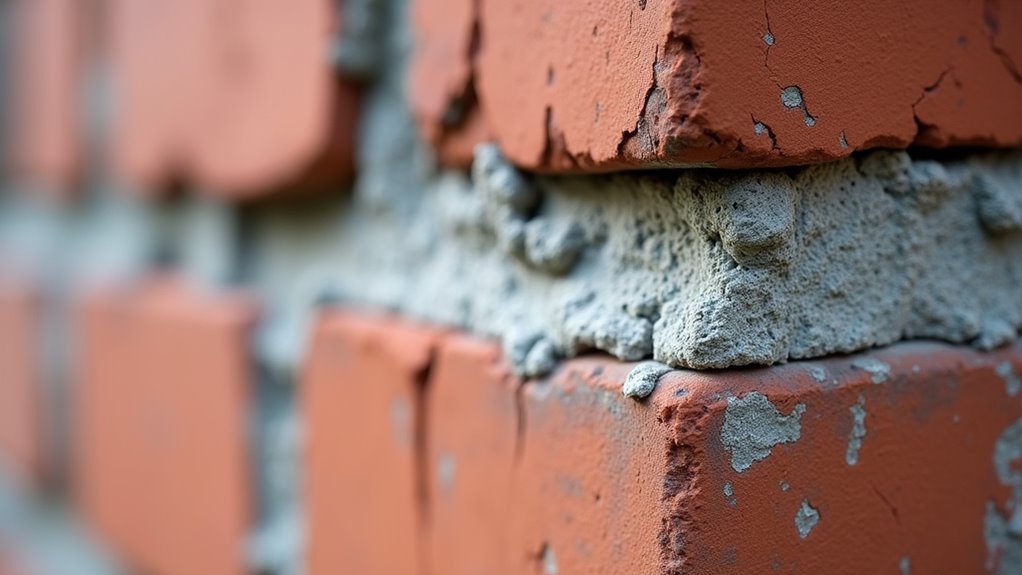
If your chimney’s pulling away from your house, you’re likely dealing with a footing failure, not a masonry problem. Undersized footings, expansive soils, or poor drainage cause settlement that amplifies into visible separation at the roofline. Caulk and foam won’t stop active movement; they just hide it. You need a structural evaluation to determine whether helical piers, wall ties, or a full rebuild is the right fix. Below, you’ll find exactly how each solution works.
Why Your Chimney Is Pulling Away From the House
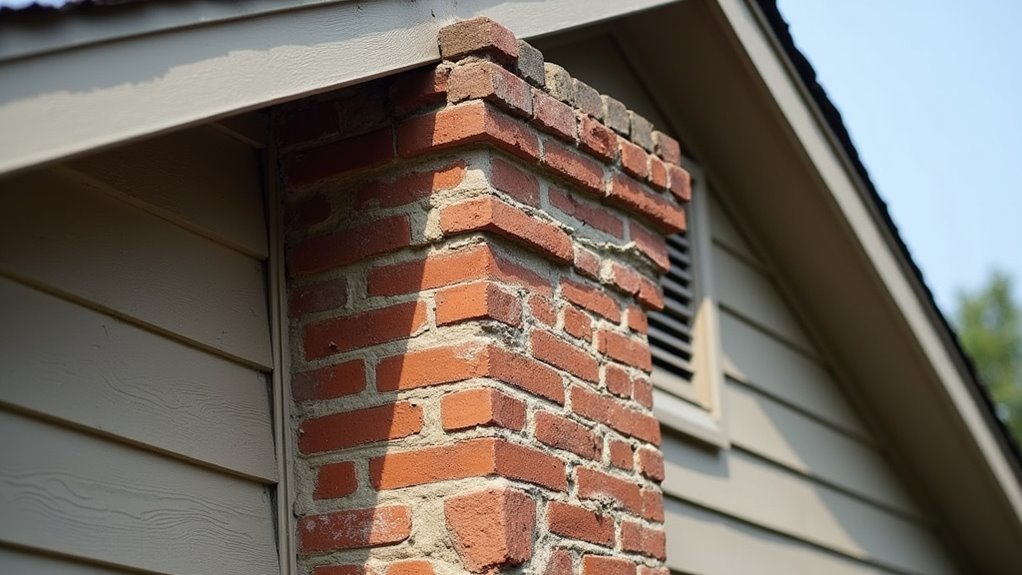
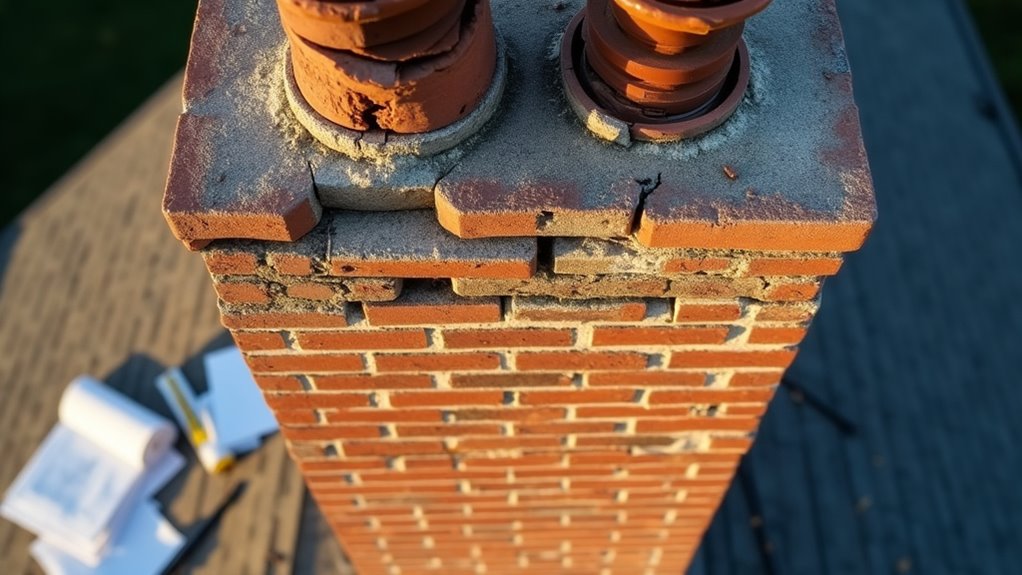
When a chimney pulls away from your house, the movement typically signals structural failure at the foundation, footing, or masonry level, not just cosmetic wear. Undersized footings, deteriorated concrete, and poor soil conditions can’t sustain the chimney’s dead load, causing progressive settlement and separation.
You’ll notice a chimney pulling away from house framing through visible gaps at the roofline, dislodged flashing, or cracking where masonry meets siding. Check your attic for off-center pressure against framing members, this confirms active movement.
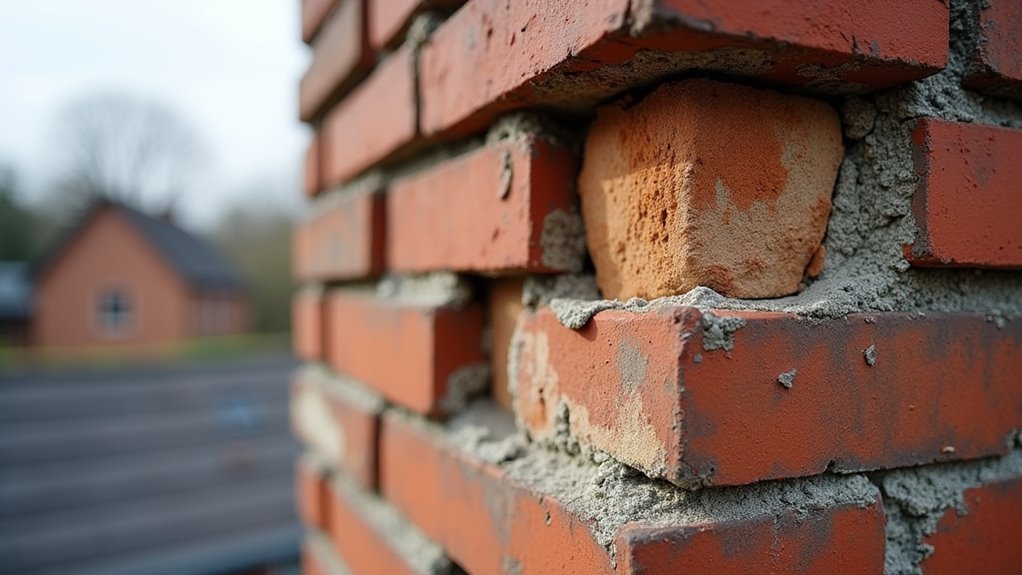
Crumbling brick, expanding soils, tree root intrusion, and drainage failures accelerate the process. If you’ve found filler materials like caulk or foam in the gap, someone likely concealed prior separation. Don’t delay professional evaluation, ongoing movement increases collapse risk. Early detection of these warning signs is crucial for ensuring the safety of your home and preventing catastrophic failure.
The Chimney Footing Is Usually the Culprit
Most chimney separations trace back to a single structural element: the footing. When your chimney footing is undersized, too shallow, or missing entirely, it can’t distribute the chimney’s load into the soil. The structure tilts outward and pulls away from your home.
| Footing Deficiency | Structural Risk | Likely Outcome |
|---|---|---|
| Missing footing | No load transfer to soil | Progressive leaning and separation |
| Less than 12″ thick | Insufficient bearing capacity | Cracking and settlement |
| Less than 6″ extension beyond chimney | Inadequate load distribution | Tilting under eccentric loading |
Poor-quality concrete, lack of reinforcement, and shallow installation compound these failures. Erosion and shifting soils accelerate the timeline. Without adequate footing support, no amount of surface-level mortar repair will stop the movement. Underpinning helical piers offer a modern solution by transferring the chimney’s weight to deeper, more stable soil layers beneath the compromised footing.
How to Spot a Leaning Chimney Early
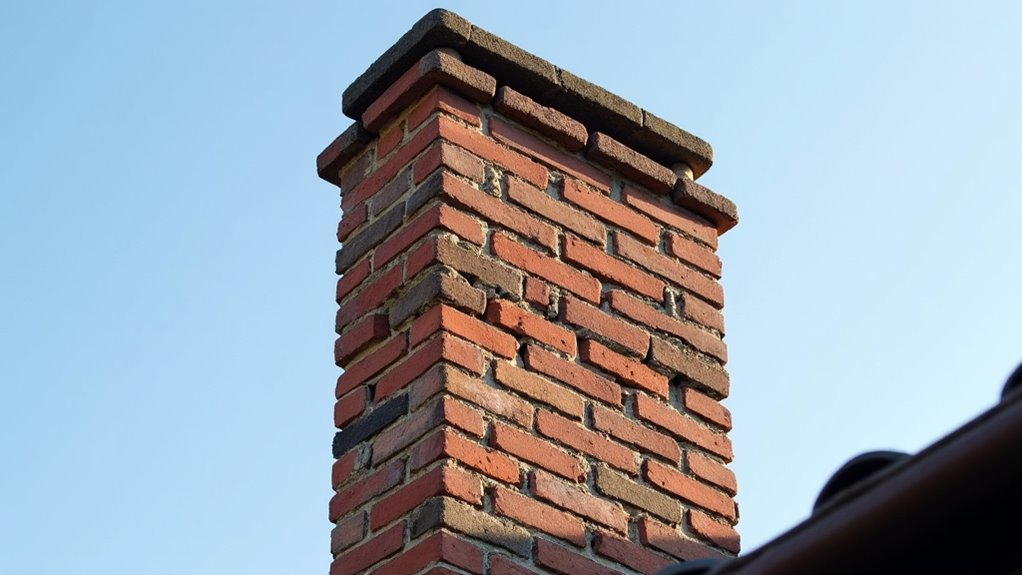
Check the joint where your chimney meets the exterior wall, any visible gap indicates the chimney is pulling away from the structure under its own weight. You’ll sometimes find that previous owners packed these separations with caulk, spray foam, or mortar patches to hide active movement, so look for filler materials that shouldn’t be there. Per IRC Section R1003.2, the chimney must be anchored to the structure at each floor and ceiling level, and any separation at these connection points signals a code-relevant structural deficiency requiring professional evaluation. As leaning progresses, you may also notice vertical or step cracks in the brick and mortar that confirm the chimney’s foundation is shifting.
Gaps Along Exterior Walls
A leaning chimney doesn’t always announce itself with a dramatic tilt, it often starts as a narrow gap where the chimney meets the exterior wall. These gaps between chimney and house indicate the masonry mass is displacing laterally or rotating away from the building’s structural plane.
Watch for vertical separation along the wall junction, stair-step cracking at mortar joints, and uneven spacing between the chimney and adjacent siding or trim. Gaps that widen toward the top suggest rotational movement, while bottom-widening gaps point to footing settlement.
Open joints at the roofline signal independent upper-stack shifting. Damaged flashing along the separation confirms the roof-to-chimney connection is under active stress. Any visible gap warrants professional evaluation, you’re observing structural displacement, not cosmetic deterioration.
Hidden Filler Materials
When a chimney begins to separate from the house, homeowners or previous contractors sometimes pack the widening gap with caulk, spray foam, mortar patches, or trim pieces, hidden filler materials that mask ongoing structural displacement. These cosmetic fixes conceal active movement without addressing the load path failure beneath the chimney footing.
You should inspect vertical joints between the chimney and siding for inconsistent material layers. Torn or separated caulk, bulging foam, or mismatched mortar colors often indicate repeated attempts to close a recurring gap. If filler materials keep failing, the chimney is still moving. Leaning chimney repair requires identifying root causes, foundation settlement, soil movement, or improper footings, not concealing symptoms. Schedule a professional structural evaluation once you find evidence of hidden fillers disguising separation.
Why Caulk and Foam Won’t Fix a Separating Chimney
If your chimney is pulling away from the house, filling the gap with caulk or expanding foam won’t stop the movement, it’ll just hide it. The separation typically stems from footing settlement or soil failure beneath the chimney, and no surface filler can carry structural load or arrest ongoing differential movement. You’re left with a cosmetic patch over an active problem that continues to worsen behind the seal.
Fillers Mask Deeper Issues
Caulk, spray foam, and mortar patch a visible gap between a chimney and house wall, but they don’t stop the structure from continuing to move. These fillers mask warning signs by concealing the size and progression of structural separation. Once filled, you can’t monitor whether the chimney is still pulling away from the framing.
Spray foam near a fireplace chimney isn’t code-compliant. Many foam products carry temperature limits as low as 240°F, creating safety concerns near heat sources. The proper detail calls for sheet metal sealing, not combustible fill material.
Behind the filler, moisture can become trapped against masonry and framing, accelerating deterioration you can’t see. Movement continues stressing flashing, mortar joints, and structural connections. You need inspection from a certified chimney professional, not a cosmetic patch.
Structural Problems Persist Underneath
Behind every separating chimney, there’s a structural problem that surface fillers can’t address. When your chimney is leaning away from house walls, the footing beneath it has likely settled independently from your main foundation. The chimney’s weight rests on a small slab or footing that can sink when supporting soils shift or fail under load.
You can’t transfer structural loads through caulk or foam. These materials carry zero compressive strength and won’t resist ongoing settlement forces. If the soil beneath your footing can’t bear the chimney’s weight, no surface application will stop the movement.
Stabilization requires underpinning piers or helical piers driven to load-bearing strata. These systems redirect the chimney’s weight from failed soil to competent bearing material, addressing the actual structural deficiency rather than concealing it.
Get the Right Chimney Inspection First
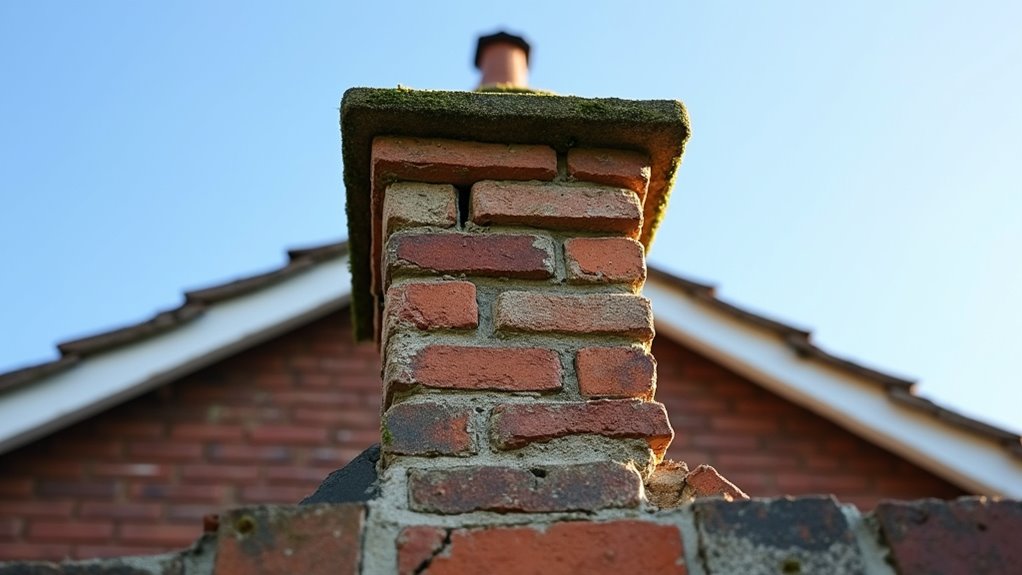
Before you schedule any masonry repair or structural correction, a certified chimney inspection establishes what’s actually driving the movement. Ground-level observations won’t reveal flue liner failures, internal masonry deterioration, or compromised structural connections. A proper evaluation identifies whether you’re dealing with surface mortar loss or active foundation settlement requiring engineered correction.
Your inspector should assess exterior crack patterns, chimney-to-house separation, flashing displacement, and footing stability. Video scanning confirms internal conditions when external chimney rebuild signs, tilting, widening gaps, or progressive lean, suggest deeper failure. Structural stability testing determines whether movement remains active.
Results dictate your repair path directly. Minor mortar deterioration warrants repointing. Active base movement requires underpinning or pier installation before any masonry work begins. Documented findings prevent costly misdiagnosis and guarantee corrections address root causes, not symptoms.
When a Leaning Chimney Signals Foundation Trouble
When a chimney starts leaning, the problem almost always traces back to the foundation rather than the masonry above grade. Because chimneys sit on separate footings, even minor base settlement gets amplified across the full height of the stack. You’ll notice a leaning chimney away from house framing when the footing shifts into weaker soil or loses bearing capacity from drainage failures.
Undersized footings, shallow concrete, and expansive clay soils accelerate this movement. Gaps between the chimney and exterior wall, cracked mortar joints, and fireplace cracks all confirm active structural displacement. Left uncorrected, the lean worsens, introducing water intrusion, smoke leakage, and collapse risk. You need a structural evaluation to determine whether underpinning, footing correction, or reconstruction is required to restore load-bearing stability.
How Helical Piers Stabilize a Leaning Chimney
Once a structural evaluation confirms the chimney’s footing has lost bearing capacity, helical piers offer a direct underpinning solution that transfers the masonry load past failed surface soils and into competent bearing strata below. Helical pier underpinning addresses settlement at its source by anchoring into load-bearing ground verified through torque-correlated capacity readings.
The installation follows a precise sequence:
- Excavation exposes the chimney footing, and helical piers are advanced until target torque values confirm adequate soil resistance.
- Galvanized underpinning brackets connect the pier system directly to the footing, establishing permanent load transfer.
- Hydraulic lifting raises the chimney toward original alignment when settlement hasn’t caused irreversible masonry damage.
This system bypasses unstable upper soils, reducing future sinking risk and restoring structural safety to heavy masonry loads.
Other Structural Repairs for a Separating Chimney
Although helical piers correct foundation-driven settlement, a separating chimney often involves multiple failure points that require targeted structural repairs beyond underpinning alone. Even after you’ve addressed chimney foundation settlement, lateral separation, cracked masonry, and compromised weatherproofing still demand independent correction.
| Repair Type | Purpose | Limitation |
|---|---|---|
| Stainless-steel wall ties | Reconnect chimney masonry to adjacent framing | Won’t correct active footing movement |
| Crack stitching with repointing | Restore mortar joint integrity and load transfer | Effective only when chimney remains plumb |
| Crown and cap replacement | Prevent water infiltration into masonry core | Doesn’t stabilize structural displacement |
You’ll need each repair sequenced properly, stabilize the foundation first, then reconnect the masonry, and finally restore weather protection to prevent recurring deterioration.
Find a Chimney Professional Who Does Structural Work
Finding the right contractor starts with filtering out companies that only offer chimney sweeping or cleaning. You need a provider whose service scope explicitly includes chimney rebuilding, masonry restoration, or structural reconstruction. Inspection capability is equally critical, structural defects like leaning, cracking, or separation require diagnostic evaluation before any repair plan is developed.
Not every chimney company handles structural work, filter for contractors who rebuild, not just sweep.
Screen candidates using these criteria:
- Structural service language, The contractor lists chimney rebuilding, construction, or masonry restoration, not just maintenance.
- Inspection-led process, They perform structural inspections that assess load-bearing integrity, mortar condition, and chimney-to-structure connections.
- Assessment capability, They evaluate deterioration systematically to determine whether stabilization, partial rebuild, or full reconstruction meets code requirements.
Verify that your contractor can address foundation-related movement, not just surface-level masonry defects.
Restore Your Chimney With Trusted Local Experts
A damaged chimney can put your home and family at risk, but timely professional work can prevent costly issues down the road. At Chimney Guard serving the Greater Atlanta Area, our certified team provides reliable Chimney Repair with quality workmanship and honest pricing. Call +1 (770) 275-2500 today and book your appointment with confidence.
Frequently Asked Questions
How Much Does It Cost to Fix a Leaning Chimney?
You’ll typically pay $2,000 to $4,000 to stabilize a leaning chimney, though costs vary widely by severity. Minor lean repairs run $1,000 to $3,500, while severe cases involving foundation damage can reach $4,000 to $15,000+ for a full rebuild. If settlement’s driving the lean, helical piers cost $1,000 to $2,000 per pier. You should get multiple estimates early, structural movement only worsens and costs escalate with delay.
Can a Separating Chimney Be Covered by Homeowners Insurance?
Your homeowners insurance may cover a separating chimney, but only when the damage results from a sudden, covered peril, like a chimney fire, lightning strike, storm impact, or a fallen tree. If the separation stems from long-term settling, poor maintenance, or gradual deterioration, your insurer will likely deny the claim. You’ll strengthen your case with documented annual inspections, photos, and prompt reporting after the event occurs.
How Long Does a Helical Pier Chimney Repair Take?
The actual pier installation typically takes one to two days onsite. You’ll spend most of your waiting time on engineering review (4, 6 weeks) and permitting (4, 8 weeks) before crews ever break ground. A straightforward chimney needing two helical piers can often wrap in a single day, while taller masonry chimneys requiring four piers and load testing may extend to two. Excavations stay open only hours, not days.
Is a Leaning Chimney Safe to Use While Awaiting Repair?
No, you shouldn’t use a leaning chimney while awaiting repair. Structural movement can crack the flue liner and open gaps in the masonry, allowing heat and embers to reach combustible framing. A compromised venting path also increases carbon monoxide risk. The lean itself signals active load-path failure, meaning conditions can deteriorate rapidly. You’ll want to stop all fireplace use immediately and schedule a structural evaluation before any firing resumes.
Should a Leaning Chimney Be Repaired or Completely Rebuilt?
It depends on the extent of structural damage. If you’re dealing with minor mortar deterioration or early-stage movement, you can often stabilize the chimney through tuckpointing or foundation underpinning. However, if the chimney’s leaning considerably, showing severe masonry failure, or separating from the structure, you’ll need a partial or complete rebuild. A professional structural evaluation will determine whether the footing, masonry, and load path can support repair or require reconstruction.