


A spalling brick chimney means moisture has penetrated your brickwork and is actively fracturing it from within. In Atlanta, heavy rain, persistent humidity, and freeze-thaw cycles accelerate this damage rapidly. You’ll notice flaking, pitting, or brick fragments collecting at your chimney’s base. Failed caps, cracked crowns, and deteriorated flashing compound the problem by routing water deeper into the masonry. Fixes range from tuckpointing and breathable sealants to full rebuilds, and knowing which you need starts with understanding the warning signs below.
What Does a Spalling Brick Chimney Look Like?
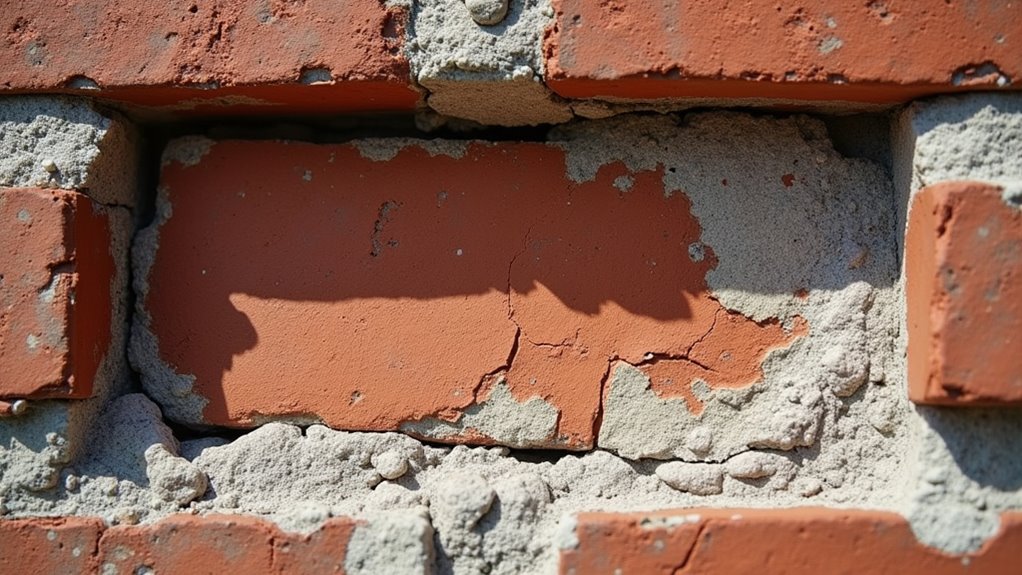
Spalling shows itself through visible texture changes on the brick surface. You’ll notice rough, pitted, or scaly areas where smooth brick once existed. Outer layers flake, peel, or chip away, and damaged sections may expose the inner brick layer. Small brick fragments collecting on your roof or at the chimney base confirm active deterioration.
Look for loose bricks, crumbling mortar joints, and white powdery efflorescence, all indicators that moisture has compromised the masonry. Bricks may sound hollow when tapped, signaling internal weakness beneath the surface. Damage typically concentrates at the chimney’s most exposed points, especially near the crown and top courses. The freeze-thaw cycle accelerates this deterioration as trapped water expands within porous bricks, widening cracks and forcing surfaces apart.
Early spalling chimney repair prevents localized patches from progressing into severe structural loss that demands partial rebuilding and considerably higher costs. Chimney liner replacement options are essential for maintaining the integrity of your chimney system. Investing in the right liner can improve efficiency and prolong the life of the fireplace.
Why Atlanta Weather Accelerates Chimney Spalling
Atlanta’s cycle of heavy rain followed by occasional freezing temperatures drives moisture deep into your chimney’s brickwork, where it expands and fractures the masonry from within. Persistent humidity slows drying between storms, keeping your bricks saturated and vulnerable to accelerated deterioration even during milder months. These repeated temperature swings compound the damage at each cycle, turning minor surface cracks into progressive structural failure that requires prompt repair. Regular inspections can identify these early signs of weather damage before they escalate into costly structural problems.
Freeze-Thaw Cycle Damage
When moisture penetrates brick pores and mortar joints, it becomes destructive the moment temperatures drop below freezing. Water expands approximately 9% as it freezes, generating internal pressure that cracks masonry from within. Each freeze-thaw cycle compounds prior damage, turning hairline fractures into spalled faces and crumbling joints.
| Freeze-Thaw Stage | What Happens | Visible Damage |
|---|---|---|
| Water Entry | Moisture absorbs into pores and joints | None initially |
| Freezing | Ice expansion stresses confined spaces | Hairline cracks form |
| Thawing | Meltwater re-enters widened cracks | Minor surface flaking |
| Repeated Cycling | Progressive internal fracturing | Brick faces pop off |
| Advanced Failure | Structural bond loss between units | Loose or missing bricks |
You’ll notice Atlanta’s temperature swings around freezing produce multiple cycles per season, accelerating deterioration rapidly. Small cracks effectively act as funnels for water, leading to accelerated damage from internal moisture and compounding structural instability with each passing cycle.
Persistent Moisture Exposure
Freeze-thaw cycling isn’t the only force breaking down your chimney’s brickwork, persistent moisture exposure drives much of the damage long before temperatures ever drop below freezing. Atlanta’s heavy summer downpours, spring rains, and sustained humidity keep your masonry saturated through repeated wetting cycles. Each cycle increases the water absorption rate of brick and mortar, widening existing pores and micro-cracks.
Once moisture migrates deeper into the structure, it weakens mortar joints and accelerates surface deterioration. You’ll notice efflorescence, cracked brick faces, and eventually loose masonry. Without vapor-permeable waterproofing, a functional chimney cap, and intact crown seals, your chimney remains vulnerable to continuous saturation. Regular inspections help you identify moisture-entry points early, before persistent moisture exposure progresses into structural failure requiring partial rebuilding.
Temperature Swings Worsen Cracking
Beyond moisture alone, Atlanta’s rapid temperature swings, sometimes shifting up to 20 degrees every few days, accelerate cracking in already-vulnerable chimney masonry. Each cycle forces your bricks to expand when heated and contract when cooled, weakening the bond between brick and mortar. Microcracks widen progressively, eventually producing visible spalling.
| Damage Mechanism | Effect on Your Chimney |
|---|---|
| Thermal expansion/contraction | Opens fissures in mortar joints and brick faces |
| Freeze-thaw cycling | Trapped moisture expands, fracturing weakened masonry |
| Cumulative stress | Small cracks escalate into structural deterioration |
Because your chimney sits fully exposed above the roofline, it absorbs more thermal stress than sheltered masonry. These temperature swings compound existing moisture damage, making early inspection critical before surface cracks progress into costly structural failures.
How Freeze-Thaw Cycles Destroy Brick From the Inside
When water seeps into your chimney’s brickwork and freezes, it expands by roughly 9%, generating internal pressure that forces cracks wider from the inside out. Each freeze-thaw cycle compounds the damage, progressively weakening the masonry matrix until surface layers begin chipping and flaking away. Left unchecked, this repeated stress can cause entire brick sections to dislodge from your chimney, creating serious structural and safety hazards.
Water Expands When Frozen
Water expands by approximately 9% as it freezes, and inside your chimney’s porous brickwork, that expansion generates enough pressure to fracture the masonry from within. Once moisture seeps into microcracks and surface pores, dropping temperatures convert that absorbed water into ice. The resulting water expansion during freezing pushes outward against the brick’s internal structure, stressing material that wasn’t designed to withstand repeated hydraulic force.
Each freeze-thaw cycle compounds the damage. Ice formation widens existing cracks, allowing more moisture to penetrate during the next thaw. Over time, this cycle exceeds your brick’s capacity to absorb stress without failing. The pressure fractures particle bonds beneath the surface before you’ll notice visible deterioration, meaning structural weakening is already underway by the time flaking or chipping appears on your chimney’s exterior.
Progressive Cracking Each Cycle
You won’t always see the damage developing. Freeze-thaw deterioration often starts inside the masonry before surface crumbling appears. Ice forming in internal voids fractures brick from within, transferring stress into adjacent mortar joints. By the time you notice flaking or spalling on the exterior, deeper fracture networks are already established.
The upper chimney courses typically fail first because they’re most exposed. Once multiple entry points are compromised, cracking spreads vertically and laterally through the stack. Chimney tuckpointing and repointing can help restore the structural integrity of the chimney. This process involves repairing the mortar joints, which can prevent further deterioration.
Bricks Eventually Dislodge Completely
After enough freeze-thaw cycles weaken the internal structure, bricks lose the bond holding them in place and dislodge entirely from the chimney stack. You’ll notice spalling chimney bricks first as surface flaking, but the damage runs deeper than what’s visible. Crumbled mortar joints can no longer secure masonry units, and individual bricks shift outward under their own weight.
Dislodged bricks falling from your chimney create direct safety hazards for anyone below. They can damage roofing materials, gutters, and landscaping on impact. Missing bricks also expose the chimney’s interior to accelerated water intrusion, compounding structural loss with each rain event.
If you spot loose or displaced masonry, you should address the damage before partial collapse occurs. Early intervention prevents costly rebuilding and protects your household from falling debris.
Caps, Crowns, and Flashing Failures That Cause Spalling
When caps, crowns, or flashing fail, they create direct moisture pathways that accelerate brick spalling across the chimney structure. A missing or undersized cap allows rain to saturate your flue and upper masonry directly. Cracked crowns let water bypass your chimney’s top protective layer, feeding freeze-thaw damage into the brickwork below. Failed flashing at the roofline routes water behind your chimney’s exterior, weakening mortar joints and brick faces simultaneously.
These caps, crowns, and flashing failures that cause spalling often compound each other. When multiple entry points fail together, moisture saturates masonry from several directions at once. You’ll notice white staining, crumbling mortar, rusted firebox components, or damp odors as warning signs. Addressing these failures promptly prevents isolated damage from progressing into costly structural deterioration requiring partial rebuilding.
Poor Brick Quality and Defects That Make Spalling Worse
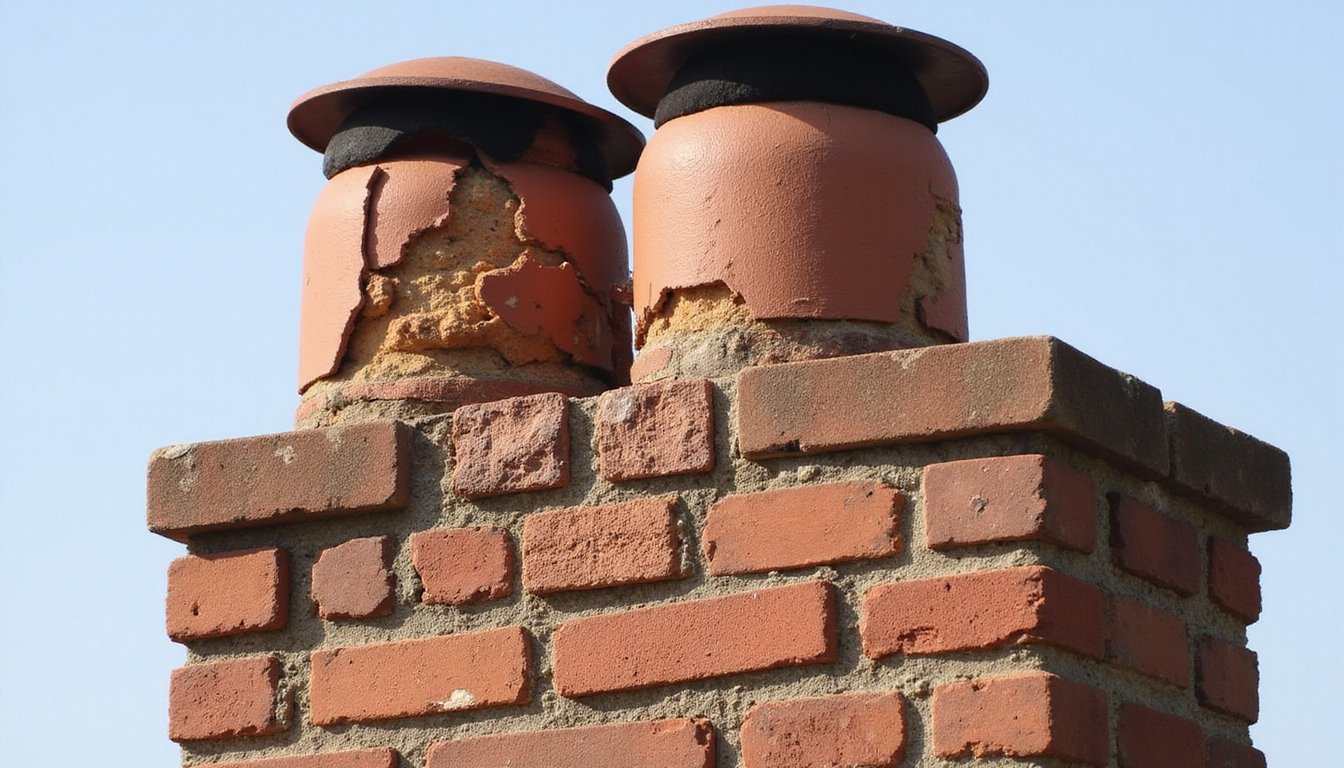
Beyond moisture entry points at caps, crowns, and flashing, the brick itself can be a root cause of spalling. Poor brick quality, whether underfired, overfired, or inconsistently manufactured, creates units that can’t withstand Atlanta’s repeated wetting and drying cycles. Porous or defective bricks absorb more water, accelerating surface separation and crumbling.
- Underfired bricks absorb excess moisture and deteriorate faster than properly manufactured units.
- Microcracks and internal voids hidden within the brick face allow water penetration that triggers progressive failure.
- Hard mortar paired with soft brick transfers stress to the brick face, causing accelerated spalling.
- Top-course bricks with poor brick quality fail first due to maximum weather exposure.
You’ll often notice clustered spalling patterns where defective batches were installed together.
Signs Your Spalling Chimney Needs Repair or Replacement
How quickly can spalling escalate from a cosmetic issue to a structural hazard? You’ll notice spalling bricks first as surface flaking, but unchecked moisture intrusion accelerates deterioration rapidly. Monitor these warning signs to determine whether you need repair or full replacement.
| Repair Indicators | Replacement Indicators |
|---|---|
| Surface flaking on isolated bricks | Chunks of brick falling from the stack |
| Efflorescence on exterior faces | Leaning or out-of-plumb chimney |
| Minor mortar joint erosion | Widespread hollow-sounding bricks |
| Small cracks in individual bricks | Cracking combined with structural shifting |
| Localized damp patches | Damage spanning multiple chimney sections |
If you hear popping or cracking sounds, schedule an immediate professional assessment. Structural movement paired with active masonry loss demands urgent evaluation before conditions worsen.
Tuckpointing and Sealants for Early Spalling Damage
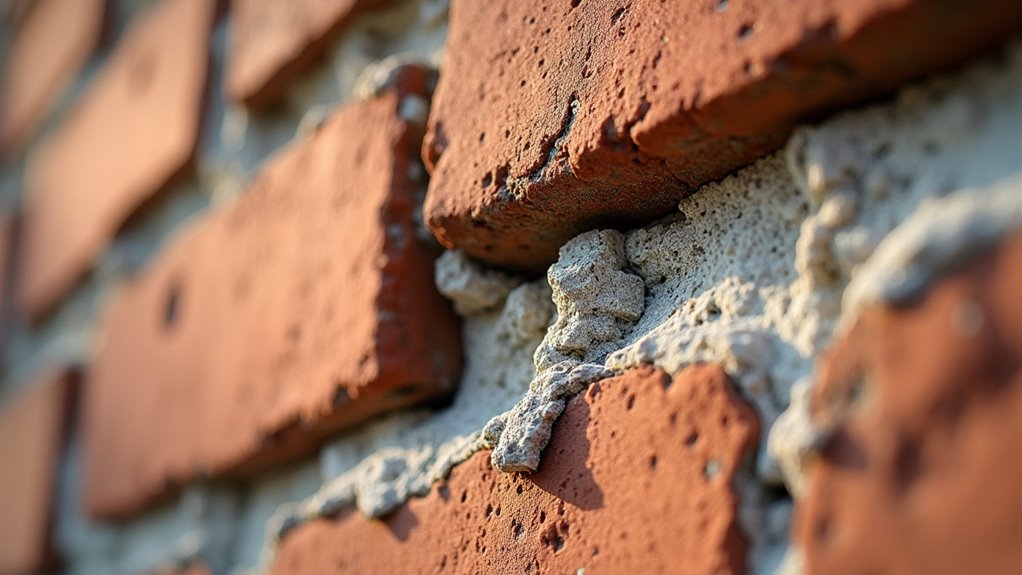
Although spalling may start as minor surface flaking, tuckpointing addresses the underlying vulnerability by replacing deteriorated mortar joints before moisture penetrates deeper into the brick. You’ll want to remove existing mortar to approximately one inch deep, clear debris, and dampen joints before packing fresh Type N mortar in lifts.
- You risk accelerating brick damage if you use mortar that’s harder than the original mix.
- Skipping joint preparation can cause new mortar to fail within a single weather cycle.
- Non-breathable sealants trap moisture inside masonry, worsening the spalling you’re trying to fix.
- Delaying tuckpointing allows minor cracks to become structural failures requiring costly rebuilds.
After repointing, apply a breathable waterproof sealant to reduce absorption while allowing vapor to escape. Sealants don’t replace mortar, crown, or flashing repairs.
When a Spalling Brick Chimney Needs a Full Rebuild
When spalling damage spreads beyond isolated surface flaking, you need to determine whether repairs can still restore structural integrity or whether a full rebuild is the safer path.
A rebuild becomes necessary when you observe visible lean, stair-step cracking, or deep spalling chimney bricks across large sections. Repeated repairs within a five-year window also favor replacement economics over continued patching. Choosing between repair or rebuild can often determine the longevity of your chimney structure. Understanding the extent of damage is crucial in making this decision.
Chimneys built before 1960 with no documented maintenance history carry likely cumulative deterioration. If moisture has penetrated the masonry core, surface restoration won’t address the underlying failure. A history of flue fire without professional liner assessment presents a rebuild-level safety concern.
When multiple failure signs appear simultaneously, you shouldn’t rely on isolated cosmetic fixes. A structural assessment determines whether partial or full reconstruction is required.
Yearly Maintenance to Prevent Chimney Spalling
A consistent yearly maintenance routine is the most effective way to prevent spalling from developing or returning after repairs. Yearly maintenance to prevent chimney spalling should include annual chimney inspections before heating season, water intrusion control through functional caps and crowns, masonry waterproofing with breathable repellents every couple of years, and early damage monitoring for flaking or crumbling brick.
- You can’t afford to skip inspections, hidden moisture damage progresses silently until bricks start falling.
- Water intrusion destroys chimneys from the inside out, making prevention non-negotiable.
- Unsealed masonry absorbs rain with every storm, accelerating deterioration you won’t notice until it’s costly.
- Early flaking is your chimney warning you, ignore it, and you’re facing a rebuild instead of a simple repair.
Restore Your Chimney With Trusted Local Experts
A damaged chimney can put your home and family at risk, but timely professional work can prevent costly issues down the road. At Chimney Guard serving the Greater Atlanta Area, our certified team provides reliable Chimney Repair with quality workmanship and honest pricing. Call +1 (770) 275-2500 today and book your appointment with confidence.
Frequently Asked Questions
Can Spalling Brick Damage Spread to Other Parts of My Home?
Yes, spalling damage can spread beyond your chimney. Moisture entering through deteriorated brick and mortar can migrate into adjacent walls, parapets, and roof intersections, weakening surrounding masonry. If water reaches structural elements behind the brickwork, you’ll face hidden damage that’s costly to repair. Poor drainage, damaged gutters, and cracked mortar joints accelerate this spread. You should address spalling early through repointing, waterproofing, and drainage repairs to protect your home’s structural integrity.
Does Homeowners Insurance Cover Spalling Chimney Repairs in Atlanta?
Your homeowners insurance typically covers spalling chimney repairs only when a sudden covered peril, like lightning, a fallen tree, or a chimney fire, caused the damage. Insurers usually deny claims tied to gradual deterioration, neglect, or normal wear. You’ll need to document the cause with photos and a licensed chimney inspection, file promptly, and pay your deductible before coverage applies to the approved damaged portion.
Is a Spalling Chimney Dangerous to People Standing Near It?
Yes, a spalling chimney poses a real danger if you’re standing near it. Loose, flaking bricks and mortar fragments can break free and fall without warning, striking anyone below. If deterioration’s advanced, you’re also facing the risk of a partial or sudden collapse. You shouldn’t ignore visible crumbling, it’s an active structural hazard. Schedule a professional inspection promptly to assess the damage and protect everyone around the chimney.
How Long Can a Spalling Chimney Last Without Being Repaired?
There’s no fixed timeline, spalling won’t reverse itself, and damaged bricks will continue degrading until you address the underlying moisture intrusion. Minor surface spalling may hold temporarily, but persistent water exposure and freeze-thaw cycling can accelerate deterioration quickly. Without repair, isolated brick loss can progress into structural masonry failure requiring a partial or full rebuild. You should schedule an annual inspection to catch damage early and minimize costly repairs.